
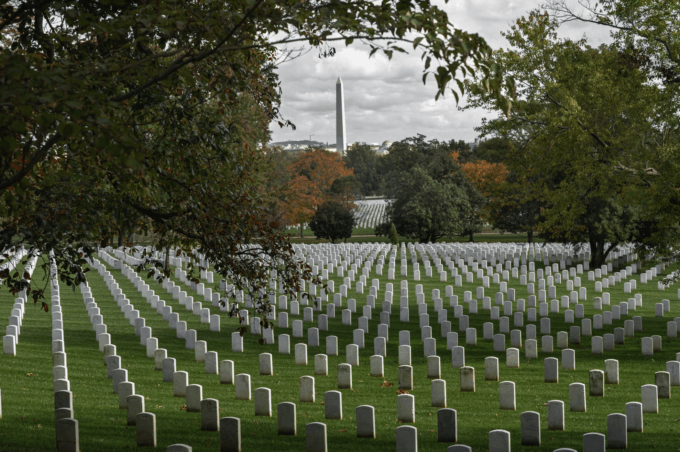
Photo by J. Amill Santiago
“The most warlike nation in history”
I sit down to write this the morning of Memorial Day 2026, a holiday to hold in memory all who have lost their lives serving in U.S. wars. The day has its origins in memorials to Civil War veterans that started not long after the war ended. It occurs on a day when the world is on edge fearing that the next round of the U.S.-Israel war against Iran could happen any day. A broken ceasefire could have shattering global economic impacts with wholesale destruction of Persian Gulf oil infrastructure. At the same time, an invasion of Cuba seems in the cards, with prospects for a long guerilla war close to the U.S. mainland. In the backdrop is a cold civil war signified by Southern legislatures’ rapid elimination of Black congressional districts after the Supreme Court eviscerated the last meaningful provision of the Voting Rights Act, completing its years of work to undermine Black political power in the South.
The Civil War and the latest war on Iran are joined in a common thread, the almost continuous record of warfare that marks U.S. existence. In 2019 former President Jimmy Carter noted that in the years since it was born, the U.S. has been at war all but 16 of them. Carter said that makes the U.S. “the most warlike nation in the history of the world.”
Even in those “peaceful” years, such as the Carter Administration, the U.S. was stirring up conflicts such as the war in Afghanistan, spurred when with Carter’s approval National Security Advisor Zbiegnew Brzesinski funneled support to the Mujahadeen to undermine the Communist government. The intent was to provoke the Soviet invasion and weaken the USSR by giving it its own Vietnam. Brzezinski admitted it. When the invasion actually occurred, which along with the Iranian Revolution of 1979 elevated the sense of threat, the president declared the Carter Doctrine placing the Persian Gulf under the U.S. security umbrella. That is the origin of the U.S. military bases Iran has recently been pummeling.
War has been very profitable for the U.S. The Revolution secured its eastern half, one of Earth’s regions most amenable to human occupation. The Civil War consolidated a continental empire with the bulk to eventually dominate the world, while accelerating the growth of an industrial giant. The wars on native tribes gained possession of the continent. The Spanish-American War gave it colonies conveniently positioned to create a world-spanning network of naval bases. Bankrolling World War I ensured its financial dominance of the world. The victory in World War II gave it unparalleled military, political and economic dominance, all potential rivals left in ruins. Even the Korean War, ended in stalemate, created the consensus for a massive military-industrial complex that was shaky before the war. If wars since have not been as successful – Vietnam, Afghanistan, Iraq 1 and 2 – they have certainly supercharged the complex in a way peace would not have accomplished. Finally, its supposed victory in the Cold War ushered in a period of unipolar dominance.
Geoffrey Perret wrote in his 1989 military history of the U.S., A Country Made by War, “Since 1775 no nation has had as much experience of war as the United States – nine major wars in nine generations. And in between the wars have come other conflicts . . . America’s wars have been like the rungs on a ladder by which it rose to greatness. No other country has triumphed so long, so consistently or on such a vast scale.”
Hubris, ignorance and imperial collapse
But our luck may be running out. Empires seem to inevitably spawn ruling elites drunk on their own sense of power. They make fatally flawed decisions based on hubris and ignorance. The Iran War looks to be a case in point. Trump and his inner circle seem to have actually believed that assassinating Iranian leadership and bombing the country would rapidly overthrow the government, rather than solidifying support for it even by people who don’t like it much. Meanwhile, they ignored entirely predictable consequences such as devastating attacks on U.S. bases and Israel, and disruption of oil traffic at the Strait of Hormuz. Trump, one of the world’s great bloviators, is finding hot air doesn’t win wars. If he returns to war, as Israel and its allies want, a new Great Depression is quite possible with loss of much of the world’s oil and gas flow. The war is currently quite profitable for U.S. oil companies, but for the overall U.S. position in the world, it is a catastrophic loss of stature.
Central to that is a loss of the sense of potency of U.S. military hardware. The revolution in weaponry caused by the application of information technology to make super-accurate missiles and drones, coupled with ubiquitous surveillance, has leveled the playing field. U.S. air and naval power still built around concepts that won World War II, aircraft carriers and manned bombers, can no longer operate freely. At the same time, U.S. deindustrialization has hampered the ability to replace the standoff weapons it can use, as well as air defense. Astoundingly, despite a 10-digit military budget, the U.S. is running out of weapons, while an adversary that allocates roughly 1-2% of what the U.S. spends on the military is holding it off.
That budget is ballooning from $1 trillion to $1.5 trillion. With hundreds of billion more for activities such as intelligence, nuclear weapons maintenance and veterans’ health, it is probably in the range of $2 trillion annually. This is even as spending for health, food aid, scientific research and public lands is being starved. All this is taking place while the national debt is nearing $40 trillion while financial markets are demanding increasingly high interest rates to finance it. Interest payments, much of which are on bonds sold to finance the military, actually exceed military expenditures. It is an untenable situation. Empires typically end in bankruptcy. It appears the U.S. empire is tracking toward financial exhaustion.
Also typical of empires is the erosion of democracy. That is certainly happening in the U.S., where wars are undertaken without popular approval, and a panopticon security system is being put in place, while dissent is marginalized and repressed. Chalmers Johnson predicted it in his last book of a trilogy he wrote on the U.S. empire. Blowback: The Costs and Consequences of American Empire, which was published shortly before 9-11, predicted such an outcome. The Sorrows of Empire: Militarism, Secrecy and the End of the Republic looked at the U.S. global military structure and coined the term, “the empire of bases.” Johnson named his final work Nemesis: The Last Days of the American Republic after the Greek god of vengeance. In its final pages, he rendered a judgement that is worth quoting at length.
“I believe that to maintain our empire abroad requires resources and commitments that will inevitably undercut our domestic democracy and in the end produce a military dictatorship of its civilian equivalent. The founders of our nation understood this well and tried to create a form of government – a republic – that would prevent this from occurring. But the combination of huge standing armies, almost continuous wars, and ruinous military expenditures have destroyed our republican structure in favor of an imperial presidency. We are on the cusp of losing our democracy for the sake of keeping our empire. Once a nation is started down that path, the dynamics that apply to all empires come into play – isolation, overstretch, the uniting of forces opposed to imperialism, and bankruptcy. Nemesis stalks our life as a free nation.”
Those words published 20 years ago once again prove Johnson prophetic. Never have the dynamics of empire been more in play than now, eroding what remains of the republic. The U.S. has never been more isolated, more overstretched, more opposed by the increasingly united efforts of adversaries, and closer to fiscal collapse. The question is whether we can turn this around, or whether the entrenched forces of empire are simply too powerful to dislodge – The complex of the military, arms industries, congressional supporters in both parties, and intelligence agencies, backed by think tanks, universities and corporate media outlets, a complex that has multiplied in scale since 9-11.
Can a “country made by war” turn to peace?
My gut tells me that such a powerful array can only be displaced by visible and catastrophic failure that arouses an overwhelming public backlash. If there is one ray of daylight in an otherwise dark sky, it is that such failure is looming. When people see gas approaching $10 a gallon, store shelves emptying, and mass layoffs throwing millions on the street, as could well happen if Trump goes back to war, that may be the trigger.
But we have to face that “a country made by war” will not turn to peace without deep systemic changes. We need an entirely different basis of economy that does not require military expenditures to keep it afloat. We indeed need an economy devoted to the needs of people and nature, where private profit is deemphasized in favor of the common good. Above all, the overarching crisis of climate now reaching new extremes demands this. We need to be spending our money on the real security threats posed by climate disruption rather rather than weapons and war.
As I have written before, I believe we need to begin by making a Declaration of Moral Independence from Empire, and work in our cities and states, communities and bioregions, to build a post-imperial future in place. Since control of fossil fuels sits so much at the center of the current empire, working to free our places from oil, gas and coal is likewise a center of a post-imperial future, not to mention one that hasn’t burned to a crisp. Rapid transition to renewables while reducing energy use overall is a keystone of declaring our independence from empire, morally and economically. Overall, we need to build economies and societies more in tune with the bioregions we inhabit.
Ultimately, we must be honest that our political system has fostered wars since the beginning. The imperial presidency was built into the system with the Constitution’s creation of a powerful executive and a federal government strong enough to conquer native tribes and consolidate control over a territory of continental scope. As with Rome, the republic eventually metastasized into empire. I tend to believe the only way to reverse this is a new political system that disperses power to places, something like a continental confederation of bioregional commonwealths, with guarantees of human and natural rights for all members of the confederation. I worry that the alternative might be a breakdown, our country made of war consumed by its own internal conflicts, sparked by economic collapse. Something like a civil war that is not so cold anymore.
That is why it is so important to begin working and organizing in the communities where we live to build local and bioregional democracies that model the kind of peaceful world we want. And at the same time commence a serious and widespread dialogue on the consequences of empire that are indeed stalking us. That is what I am thinking about this Memorial Day.
This first appeared on Patrick Mazza’s Substack page, The Raven.
The post On this Memorial Day, Nemesis stalks a U.S. Empire at war appeared first on CounterPunch.org.
This content originally appeared on CounterPunch.org and was authored by Patrick Mazza.