
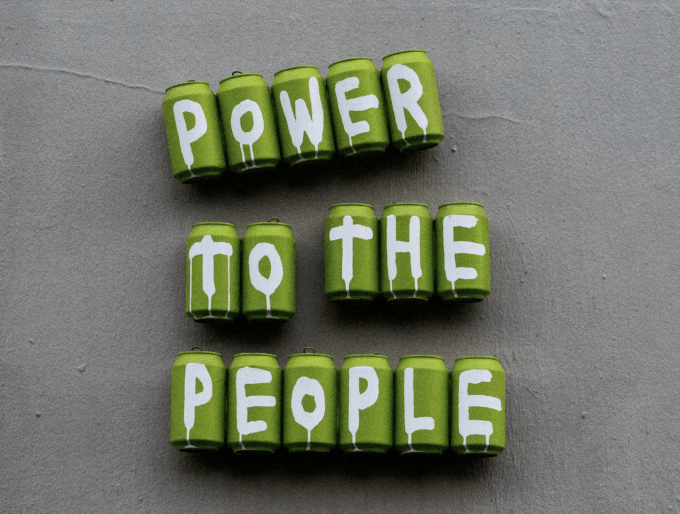
Photo by Federico Scarionati
Interview with João França
Building movements is an arduous and involved process. It takes organising people, building morale, and grit, and that isn’t even half of it. Don’t you wish you had a positive blueprint for how to move forward, to draw inspiration from, to continue the fight? Look no further than João França’s Yes, It’s Possible! A Handbook from Building Power from Below (Common Notions, 2026). Based on the success of the Platform for People Affected by Mortgages (PAH), a movement in Spain that has stopped evictions, kept people in their homes, and changed perceptions of housing and financial institutions. França explains how PAH showed, through small everyday victories, that “yes, it’s possible.” This is a critical mindset needed now more than ever, given the context of rising fascism and the need to continue to be inspired to build movements today.
Ly: What first compelled you to write this book?
João: I used to work as a journalist and the Platform for People Affected by Mortgages (PAH) was one of the strongest movements occurring. It was really inspiring to see how effective it was, actually responding to the real life problems that people had. The PAH was tangibly keeping people in their houses and blocking evictions. People connected really well to this movement, as they felt they were doing something real. It was really inspiring and moving to see how it transformed people’s lives.For me, who got involved in movements later, it was my main political school, of a different way of doing politics.
As a journalist, I felt that I was supporting the struggle through my work to communicate what was occurring to a wider audience. For this book, I approached the movement, to see if they wanted to work on this together, and that got me more involved, so it was a collaborative endeavor.
Ly: At what point in the journey did it really feel, Yes, It’s Possible? In what way is that a positive and encouraging mantra?
The most amazing thing about the PAH is that you see everyday that Yes, It’s Possible. Because everyday you are making a big difference for the family that lives in that house. So every time we go to an eviction, and stop the family getting evicted, you see it can be done. This movement changed the perception of housing and financial institutions, for example people used to trust the banks, and now they do not.
It has made an impact in other movements, and all the different organisations that, even when they have differences with the PAH, they are inspired by the mutual aid model that the PAH created.
One of the lessons that the people that the PAH started, who came from other social movements, they always had big goals, and it’s difficult to see the world to come. Within the PAH, they realised the importance of the small everyday victories, so when you have these, you are showing the movement that we do win things, and we know we can build bigger things.
External communication was extremely important to the PAH organisers. For the very first eviction that PAH blocked, it was a small village far from Barcelona, they had to rent a bus to go there, and they weren’t sure what the impact would be, but they still went with two or three cameras and the video they published later had a huge impact, and it showed that people can stop the bank from kicking people out of their houses. The shift of narratives has also to do with other ways of telling things, and making fun of those in power, having fun while fighting, and these are also connected. Trying to simplify bigger problems in our system and explain them in a simple way, and make them fun and appealing. There are fun PAH videos of doing parodies of famous songs which do really well on social media.
There was a person who was previously involved in anarchist organising and used to wearing black, and always being quite serious and a woman brought him to dance, inside the takeover of the bank – showing that you can do movements differently. People are always having so much fun.
When people are having fun week after week, it makes it sustainable for the long-term. When I read the book Joyful Militancy, it really made me think about the PAH.
If there is no joy in struggling, it’s very hard to get the people who need it the most, to get involved in the struggle.
Ly: I was struck by the fact that the PAH welcomed all people, from the far left to the far right, even when some members questioned this. What does that show about the need to work together across political lines?
J: What’s interesting about the PAH is that it’s not too ideological. The PAH was meant to get to the individuals who are actually struggling, so they had to listen to them. It is a movement based on mutual aid. Sometimes when you have a staff of organisers, they are probably more ideological, and might have more specific political projects. When it’s based on mutual aid, and it’s horizontal and all the decision making is democratic and involves everyone who is part of it, the person who is dealing with the housing issue can focus less on ideological divides. If there is someone struggling with a housing problem, maybe coming to this organising group will change their political views in the long run. But that’s not the main goal.
In other spaces you might say this person has infiltrated the movement and we have to get rid of them, but in this space, you welcome people based on the issue they need support with, and it can change people’s views over time.
Ly: Why is it so critical to build power from below?
J: Most of the people who were not activists or organisers before the PAH, but are now. Most people highlight the empowerment they feel from being part of this movement. The movement helps people realise they have power when they act together and when they organise.
There is something characteristic of many Spanish movements, is autonomy from institutional power, so there is a fear here of co-option, by power, or political powers. So “building power from below” is not about the institutions, but building a powerful actor that can influence politics and fight against the powerful from outside. It’s about autonomy and non-partisanship.
Ly: Can you explain how PAH operates differently compared to organising in the US?
J: A lesson to learn from PAH is that you can organise without money, and for a lot of organisations in the US it is hard to imagine. There does have to be a lot of unpaid work and hours.When you have a space where people come and share their problems, there are those with more experience and less experience, they can help others, and this makes the movement sustainable. If you build a strong enough base for a movement like this, if you can’t make the meeting, it’s ok, because everyone can keep the movement going.
A lot of the PAH chapters are run by people who got there from having a housing issue, with no organising background.
Ly: How do you see the role of civil disobedience in making change? How critical is it to grassroots movements, and what can we learn from the PAH in this regard?
J: It’s key in the PAH experience, and it isn’t the same around the world as the laws are different everywhere, so the power to sit and negotiate, to shift narratives and perceptions, shift common sense, these are all part of the process of building legitimacy. When the PAH does civil disobedience, it’s saying we have done everything that the system has offered us to solve this problem, then we must do civil disobedience because we have no other option. So for evictions, we can prove and show that this family cannot afford to pay for a different house, and we have spoken to the bank or the landlord, who haven’t offered any other alternatives, we have spoken to the system, gone to court to try to find a solution there etc, so that’s why we are now standing in front of the door and the police to block it. This is showing the building of legitimacy, and this is one of the main lessons we can learn from the PAH.
Ly: Can you talk about the role of care in sustaining grassroots movements?
J: Something that I find really important that changes people’s subjectivities, is how people are coming from an individualistic life of what the system and the powers impose on us, so they come to the PAH looking for a solution to their specific problem and they learn how to be together, how to be in common, how to build things together that can improve their life and help think about a different better life. There is the part of being together. The other mantra of PAH is that you are not alone, so when you cross the door into the PAH, you are not alone anymore, you will have support.
There are other practices that others may not see as political, but it’s about celebrating birthdays, and festivities. When you stop an eviction, people cook something, and bring it to the meeting. It ties people to the movement and keeps it sustainable. Making sure that everyone has something to do. Recognising that it’s being a spokesperson, and writing a press release, is just as important as cooking and having a collective lunch etc., recognising that all these different tasks are necessary and needed in the movement and is part of the care work that makes the movement sustainable.
Ly: Can you talk about creative resistance?
J: Building alliances and collaborations with other people in other movements, so you can ask people who are in an artists collective that will make the media put attention on it. When the movement was getting less media attention over time, it would be harder to get the banks to meet with them etc., so they would have to constantly reinvent new ways of communication to get attention, and it’s also more fun to always be doing new things together. When you always have to reinvent yourself, as the PAH is good at, though it’s very exhausting. In the book, it’s about actually showing how the PAH does things, with the QR codes embedded within it that are mostly videos, for example, the parody of Fresh Prince of Bel Air song, while occupying a bank branch.
I tried to transmit all that has moved me about the PAH, but I think seeing it is always stronger.
Ly: Do you have a final message to leave with readers?
One of the things most inspiring in the movement, is to see how common people with no organising or activist background, but who are struggling with really hard problems like risk of homelessness, come together. It’s really inspiring to see that through mutual aid and organising that in common they have power, and can really change things.
The post Yes, It’s Possible! A Handbook from Building Power from Below appeared first on CounterPunch.org.
This content originally appeared on CounterPunch.org and was authored by Ly Rosengard.