
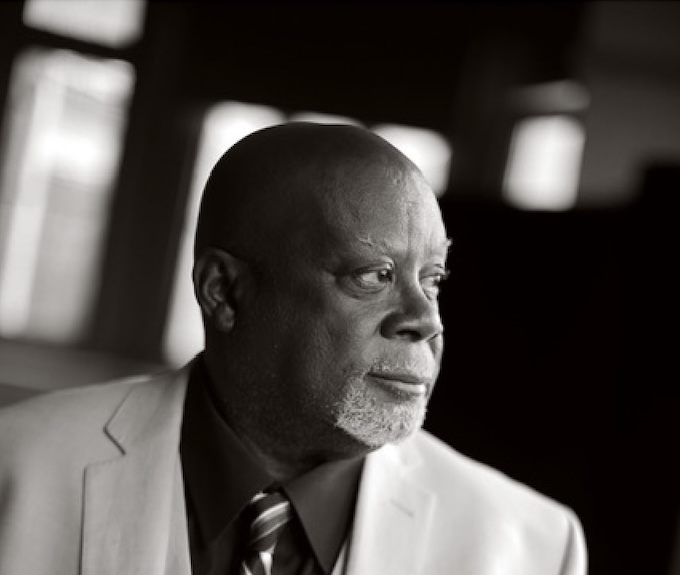
Fred Anderson. Photo courtesy of Baraka Books.
President Obama refuses to go low, and so he politely compares the nightmare that Americans are living through to “every day is Halloween.” I find myself seething every day. Some of my friends, among the brightest individuals in the United States, are leaving the country. Europe, the traditional country of exile for Black intellectuals and writers, has been replaced by Ghana and even Thailand. Whites are leaving in “record numbers,” the word used by The Wall Street Journal to describe this version of white flight.
In order not to alienate their advertisers and MAGA customers, the media line attributes Trump’s re-election to the electorate’s concern about high prices. A study that analyzed the vote, however, concluded that the millions of voters who supported Trump did so because he “shared their prejudices.” William Wells Brown predicted in his play “The Escape or, A Leap for Freedom,” published in 1858, that if it came between white supremacy and the Constitution, whites would choose white supremacy
Millions of whites not only hate Blacks and browns, but even yellows, the model minority. Trump defined them the way they’ve been defined in California for over one hundred years, as carriers of disease.
My assertion that Trump received votes by casting Kamala Harris as a prostitute was published in Spain’s newspaper El País. **
Fred Anderson’s Eyes Have Seen was published in Canada by Baraka Books, which is also my publisher.
Anderson belongs to a tradition of Black people talking about their experiences in the United States from Canada, dating back to Benjamin Drew, A North-Side View of Slavery: The Refugee, Or the Narratives of Fugitive Slaves in Canada (Boston: Jewett, 1856).
Fred Anderson knows the connection of his book to Drew’s anthology. His witness is a worthy contribution to the lineage of writers who, writing from Canada, didn’t shut up about the abominable aspects of American history. Overwhelmed by the billionaire’s mainstream media where Black pundits are reduced to timidity or else are canceled, like the outspoken Don Lemon and Joy Reid, whose ouster was seen as a victory by the chair of the FCC, Black literature has always been the poor person’s CNN and can be just as effective, which is why it’s been banned or Oprahized.
Imprisoned during his time with SNCC, all Anderson needed was a pencil and a piece of paper to make his views known. Kenyan writer Ngugi wa Thiong’o wrote his protest on toilet paper when jailed in Kenya.
Books and theater from Blacks, Hispanics, and Native Americans must be effective; why else would a far-right government strive to ban them?
But, before she died, an excellent novelist, Elizabeth Nunez, told Poets & Writers, publishers want “girlfriend books” from Black writers. Books termed Black Bogeyman books and films in which Black men are depicted as “soulless monsters, ” as Time’s critic Alissa Wilkinson has noted, especially books about Black incest, which are flying off the shelves. According to novelist Diane Johnson, they entertain “largely white audiences.”
Steven Spielberg, Tate Taylor, and women like Rebecca Cutter, Kathleen Kennedy (“The Color Purple”), Sarah Treem, and others are cashing in. Even convicted serial rapist Harvey Weinstein made profits from “The Color Purple,” and tried to cash in on the film “Precious,” in which both the mother and father have sex with their daughter.
Books that would have received notice before the sales departments sent Literary editors packing are ignored. John O. Killens’ posthumous novel, The Minister Primarily, would have made the front page of The Times Book Review in a former time. In it, Killens, like John A. Williams before him, expanded the range of the Black novel to include African languages. Baldwin and Ellison were ambivalent about Africa.
Fred Anderson has done the same as Williams and Killens. He takes us on a journey from the South to the Inuit people of the farthest north. He is not limited. He is a North American writer.
Anderson wound up in Canada, so as not to be cannon fodder for a war where Blacks and browns were sacrificed disproportionately, while the sons of the rich received deferments. Every Black veteran from that war whom I know suffers PTSD. They joined the thousands who have died in every war from the American Revolution, when some were returned to slavery after fighting for the white man’s freedom, only to have their valor dismissed by an ignorant Secretary of War as “DEI crap.”
Blacks have millions of white allies. They voted for a Black president twice. But even when they try to do good, they are hindered by custom. Customs are enforced by the police. So when Fred Anderson was invited to a white church to speak, the police, whose mission is to keep the races apart, except when they visit their prostitutes, showed up.
We entered the church and chose a pew. You would have thought I was a purveyor of leprosy; whites scattered like cockroaches leaving us the sole occupants of the pew. The minister nervously officiated.
“This is the Lord’s house. Be at peace,” he intoned. The less than serene parishioners huddled like praying mantises against the far wall.
“We welcome our guest, but the local boy knows our traditions. His place of worship is across town. Everybody, please stay calm. We will soon resume our regular order of service. The Lord is good,” he sermonized.
The prayerful mantises hissed in reply, “The Lord is good. Glory be to the Lord, most high.”
I was looking over my shoulder expecting the police to arrive and haul us out. The station was nearby. We decided it was prudent to forgo any further homilies.
Exiting, I was arrested by the police and dumped in the Hattiesburg City Jail.
“Boy, what the fuck do you think you’re doing?”
The deputy scowled.
The whites who monopolize punditry fail to realize that the police treat them differently. Injustice Watch analyzed thousands of posts from police and found racist misogynist and homophobic comments. Klansmen have been members of the police departments since the beginning, and KKK and Nazi sympathizers now run the United States government with the approval of possible future president Kevin Vance, who traveled to Germany, where he shocked the German establishment by embracing the AfD, Germany’s Neo Nazi party. One of those welcomed into the GOP is Nick Fuentes, who says that Trump is squishy and wants a real Nazi for president in 2028.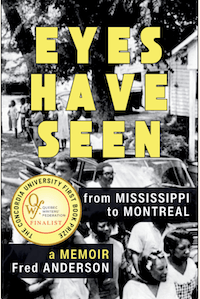
Violating other Southern customs can get you killed. The title of my book Reckless Eyeballing was based on the case of Matt Ingram, who was arrested for allegedly staring at a white woman who was seventy-five feet away from him! This was the fate of Samuel Johnson, Anderson’s cousin. “The police report said that he had been ‘eyeing’ a white woman through the window of the inn. The police approached. He fled and was shot multiple times in the back, suffering a broken neck by colliding with a fence post. None of us believed this account. Sammy’s father—residing in Michigan arranged for the body to be transported by train. Lawyers were retained and an independent autopsy was performed, which contradicted the police report. Sammy had been riddled with bullets to his front and rear and had sustained multiple broken bones in his arms and legs, resulting from a blunt force instrument.”
Most Black families living in the South at that time had stories like those found in Anderson’s book. Both my grandfather and his sister were murdered by racists.
One could say that Fred Anderson was born in a bad time and a bad zone–1947 at 4:40 p.m on 326 Lee Street, Hattiesburg, Mississippi, Forrest County. The county was created from Perry County in 1908 and named in honor of Nathan Bedford Forrest, a Confederate General in the American Civil War and an early member, if not founder, of the Ku Klux Klan. All of the founders of the Klan were Scots-Irish people whom Benjamin Franklin called ‘white savages.”’
Nathan Forrest ordered his troops to massacre Black Union troops at Fort Pillow even after they’d surrendered. Anderson writes
I was born and raised the second youngest of eight children. I was a mama’s boy. I could get privileges unheard of by my older siblings. Likewise, mom knew she could get anything from me. I was a tattletale. The word among the siblings was, ‘Don’t tell Fred or mom will know.’ We lived in a small house at 326 Lee Street in Newman Quarters. Ours was a medium-income household. I don’t ever recall thinking of us as poor. My father worked for the federally subsidized Hercules Powder Company. A company job considered to be among the best available employment opportunities for ‘Negroes.’ He was a highly respected and reliable provider.
Mom was a domestic worker, keeping house for a local white woman. She did the cleaning, laundry, and cooking of meals. I remember once joking that all the black maids had the power to wipe out the white population by food poisoning. She laughed and cautioned me to never, ever, let anybody hear me say such a thing. Ironically, she had full access to the house of employment but could not enter through the front door.
Ours was a close-knit community of strong men and even stronger women. Every mother was your mother. All were empowered to administer an ass whipping and send you homeward where the next ass whipping awaited. We were surrounded by mom’s and dad’s sisters and brothers. All living alongside or in the rear of our house. My grandparents resided two houses down at 116 Lee Street. There’s domestic violence practiced by both men and women. “Sister Mary was abused by her boyfriend. Mary returned home late one night with eyes horribly blackened and swollen purple-black lips. Mary didn’t say a mumbling word. Mom and dad were apoplectic. The police were not summoned. White police in Hattiesburg didn’t give a pinch of salt about crime within our community.
Mary got even. The boyfriend lay crumpled on the ground. There was an ever-expanding gurgling pool of blood. Mary had triggered the release button of her switch-blade knife, cut him down to size and gutted him like a bot- tom-feeding catfish.
But like the harm inflicted upon the Native American community,especially the women, most of the violence aimed at the Black community comes from external forces.
Southern parents, concerned about the safety of their children, wondered whether they should be sent to the North.
I overheard her asking my father whether I should be sent to live with relatives in the North. Away from the indignities of whites-only and colored-only signs for public toilets and water fountains. Away from the demeaning reductions of takeout services at the side window of restaurants. Away from the no-trying-on of clothing because no white person would purchase anything that had touched a black body. Away from balcony-only seating in the theatre—derisively referred to as ‘nigger heaven.’ Away from the feet shuffling and hats-off honorific of surrendering the sidewalk to allow unimpeded access to whites. Away from boarding the back of the bus—the ‘colored section’—and the compounding contumely of being squeezed further to the back to accommodate surplus white passengers, black children and elders surrendering their seats and standing. Away from the obsequious eyes-down kabuki dance to approaching white women, to protect the black body against allegations of ogling them.
Instead of going North, Fred Anderson joined SNCC at the age of 15.
I was fifteen when I left home, sucked into the maelstrom of the U.S. southern civil rights movement. It was an exhilarating and dangerous life working as a field secretary for the Student Non-Violent Coordinating Committee (SNCC)—riding the tides of ascendancy and decline of, arguably, the most preeminent organization of the movement for civil rights. SNCC was in decline in the late summer of 1965. Our policies against the Vietnam War and the support of liberation movements in Africa and other Third World countries were considered controversial. Some white liberals and Jewish donors were particularly outraged with our advocacy for nationhood for Palestine. The U.S. State Department was equally chagrined with our championing, the divestment campaign against the apartheid regime of South Africa. Our actions were targeted by the Federal Bureau of Investigation (FBI). A campaign of disinformation, entrapment, and assassinations ensued. The military draft boards systemically and disproportionately inducted social activists, poor blacks, and white allied activists—a supply line for the Indo-China War and decimation of the ranks of SNCC.
SNCC chose the erratic and news-camera-addicted Stokely Carmichael over John Lewis, which presented a crisis for SNCC. “Lewis was visibly shaken and personally wounded. Many agreed it had been a coup d’etat. Organizations. Many left the final cloister feeling that this was no longer their SNCC. I, too, questioned whether SNCC could successfully stake out new ground.” Faced with a draft notice, Anderson chooses exile.
I had been summoned for induction into the armed services, as had Bob and Herman. I had sent my declaration of refusal to serve. The three of us accelerated our discussion about fleeing the United States. Family and friends reported they were being harassed by FBI agents. Herman and I were clearly the subjects of heightened surveillance. Leaving the Peg Leg Bates Estate, Herman Carter and I accompanied Bob Moses to Harlem, New York, and soon afterward crossed the border to Canada.
I received, on January 7, 1977, an official summons to attend my Canadian citizenship ceremony. Well, not mine alone, but a group ceremony. I—we would be tested on twenty questions about the rights and responsibilities of Canadians and Canada’s history, geography, economy, government, laws, and symbols. It had been a long-anticipated event. I found the stately Beaver Hall building and was ushered into the testing room. Stared at the twenty questions. Gulped air and relaxed. I knew the answers. We were led into an antechamber and individually told that we had successfully—or you return.
Anderson succeeds.
Canada is no racial panacea. While visiting Toronto, I heard Jamaicans complain about their treatment in Toronto, and a Black man who attended my book event in Montreal said that he was always being hassled by the police. But given the situation in the United States, where millions of whites by voting for an administration that pals around with Neo Nazism, and rewards billionaires who want the country to become the old South African Apartheid government in exile, Canada is probably a good place to be.
Anderson is a superb literary craftsman and his book Eyes Have Seen ranks high among those written by others who’ve recorded the highs and lows of the Black experience in North America. The good times, the bad, and the times worse than bad.
Ishmael Reed’s latest novel, The Terrible Fives, will be published in November.
The post Fred Anderson, North American Writer appeared first on CounterPunch.org.
This content originally appeared on CounterPunch.org and was authored by Ishmael Reed.