
As the death toll from last week’s glacial flooding disaster at the Tibet-Nepal border surpassed 1,000 on Tuesday, sources inside Tibet told Radio Free Asia that a group of 10 Tibetan travel guides are among the missing.
AFP reported that more than 4,500 people were missing, but both the death toll and the number of missing could be higher, as exiled Tibetans and advocacy groups have accused China of underreporting casualty totals on the Tibetan side of the border.
Chinese authorities have forbidden journalists from entering the disaster zone or interviewing affected family members, and have punished those accused of “spreading rumors” about the disaster, New York-based Human Rights Watch reported.
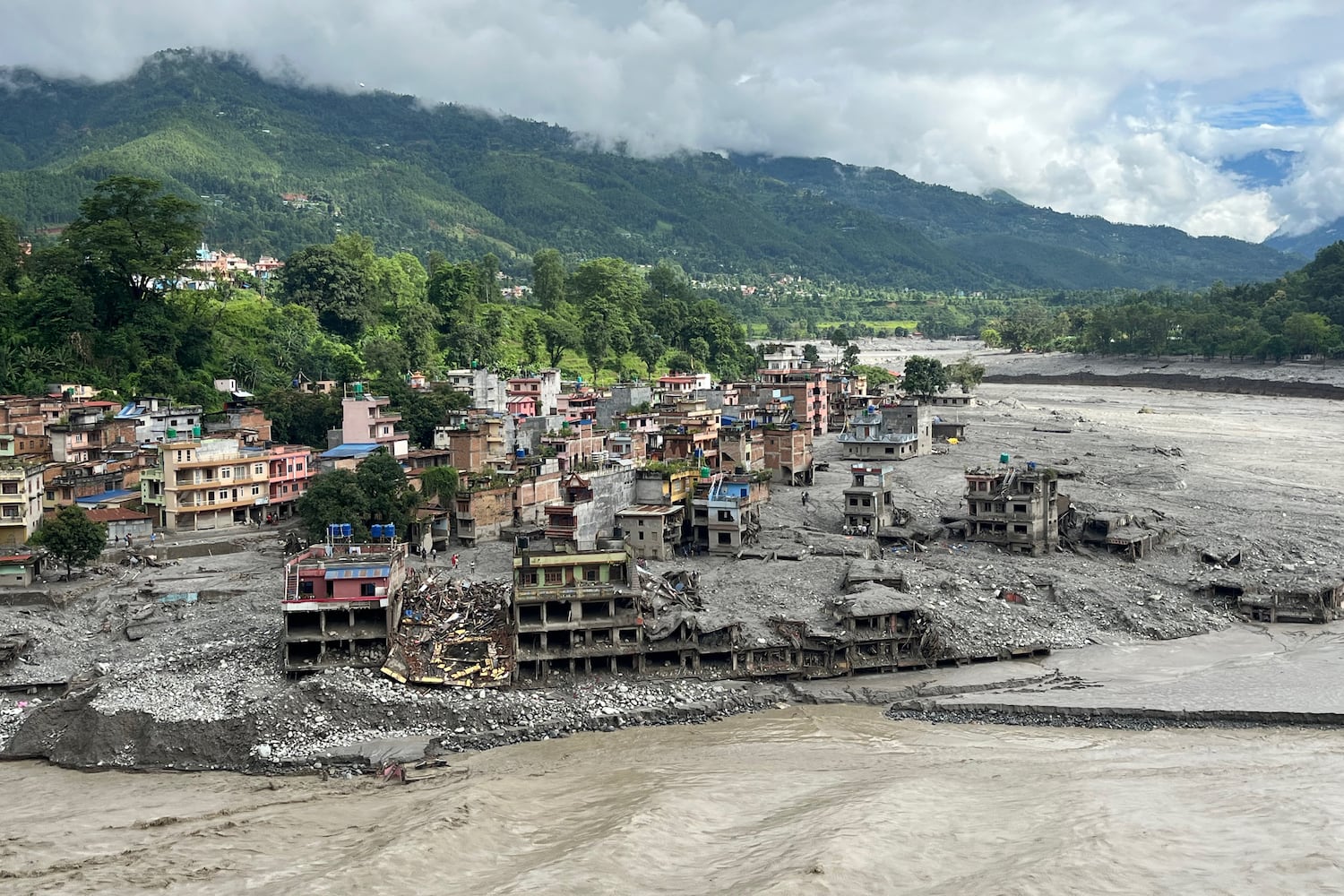
Residents and officials of Kyirong County (Gyirong in Chinese), which borders Nepal’s Rasuwa district, witnessed entire villages destroyed, they told RFA Tibetan on condition of anonymity for security reasons.
“Within 3 minutes the flood reached the area near the Kyirong customs office, and no one who was there survived,” a Tibetan resident of Kyirong County told RFA. “There were about 30 people in the village.”
The resident said that many people from the area had been working in the area on road construction at the time of the disaster.
“Now, many of them are dead,” the resident said. “There is no hope left. It was like a dream. It came out of nowhere.”
A Chinese official in the same area confirmed that several people who were displaced by the disaster were able to find alternative lodging.
“A few people from the affected area have been kept in a guesthouse and in paying guest rooms in private homes,” the official told RFA. “I am not comfortable explaining other details.”
Missing guides
Ten Tibetan travel guides from the Tibetan capital Lhasa, the surrounding areas, and elsewhere have been missing since the flood, another Tibetan resident told RFA. The source said that the guides were stationed in the Dram (Zhangmu) area along the border.
“They usually take travellers and tourists from the Nepal-Tibet border and take them on excursions and pilgrimage to places like Mount Kailash and Lake Manasarovar,” the second resident said.
Two people from the village of Resuo survived the disaster according to a third Tibetan resident, also from Kyirong.
“Two people were able to run toward the mountain,” the third resident said. “Only if you can run toward a hilltop can you save yourself; otherwise it is very difficult to survive. The force of the water was so strong.”
According to the third resident, Kyirong county was largely spared because it is a bit farther from the affected area.
“But the water flowed about three kilometers upstream,” the third resident said. “About 15 families from the village had their homes completely destroyed”
The third resident said that many of the people who work there are in the military or are customs officials that work on the border.
“We … are also not allowed to visit the affected area,” the third resident said. “All we can do is console the family members.”
Stories of survival
On the Nepal side of the border several residents told RFA, on condition of anonymity to speak freely, that they witnessed the disaster as it happened.
“The flood came like a fall from the sky and felt like an earthquake,” a resident of Serthang, a subdistrict of the town of Timure in the affected area on the Nepal side, told RFA. “I saw the flood coming down and entering my home at the same time.”
The Serthang resident said that several villagers were at the family home to celebrate the birth of a son.
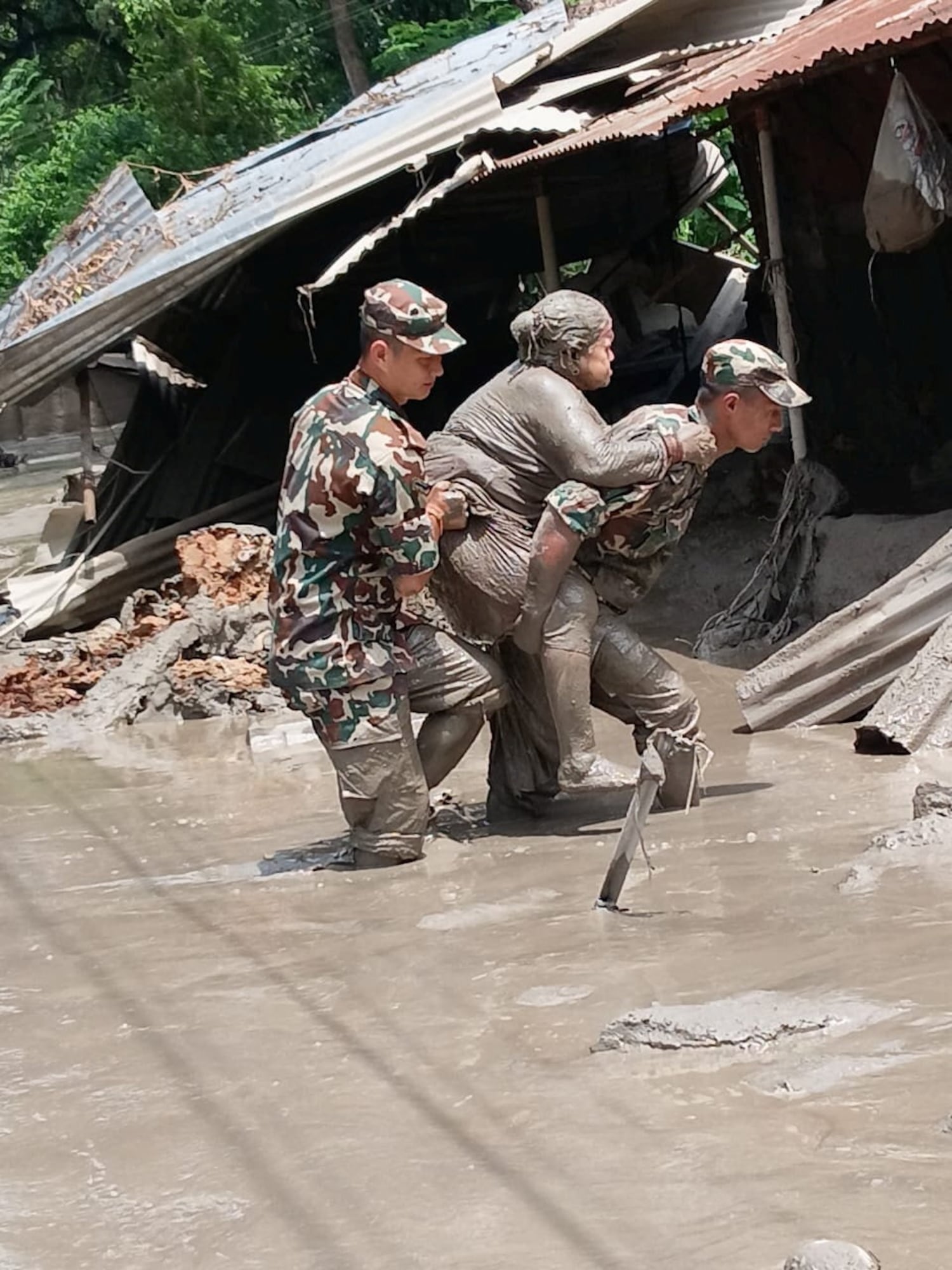
“Thankfully, we were all able to run and escape,” the Serthang resident said. “But there were many older people and children who could not escape because they lacked physical strength.”
A second Serthang resident told RFA that he saw his elderly mother washed away in the flood.
“Before the flood, my wife and I were with my 98-year-old mother,” the second Serthang resident said. “I had to leave my mother behind and saw her swept away by the water in front of my eyes. My wife barely escaped the floodwater.”
The second Serthang resident said that within two minutes the village was lost to the carnage.
“The electricity had gone out sometime before the flood came,” the second Serthang resident said. “Then suddenly, the whole village was filled with people shouting. In two minutes, the whole village was flooded. I was so scared that I had to run barefoot.”
A flood of this magnitude was unprecedented for the area, the second Serthang resident said.
“The height of the flood was as high as a tall building,” the second Serthang resident said. “It seemed like the water was in the sky. In the meantime, the house was no longer visible.”
Edited by Eugene Whong
This content originally appeared on Radio Free Asia and was authored by RFA Tibetan.