Image by Maciej Ruminkiewicz.
“A few people are getting fabulously, unimaginably wealthy at the same time that entire generations of families worry they will never be able to afford to buy a house, raise children or enjoy a comfortable retirement.” New York Times June 13, 2026
I have written many articles published by Counterpunch on the way wealth is distributed in the United States showing how wealth concentration generally keeps growing and is so wrong and disturbing. Marxists would explain that the accumulation of capital has the tendency to give rise to the centralization and concentration of capital. That has certainly been the case with the wealth holdings of individuals as revealed by the Blooomberg Billionaires Index that is recalculated daily and the Distribution of Household Wealth in the U.S. since 1989 put out by the Federal Reserve Board covering the changes from one yearly quarter to the next.
The tendency has been one of growing wealth concentration, though there have been periods of setbacks, something inevitable given the instability of capitalism with its periods of rapid growth followed by slow or negative growth. However, those periods of declines in wealth concentration have been followed by the wealthiest holding an even greater share of the country’s total wealth.
For example, according to the Federal Reserve Board figures, the share of the nation’s wealth held by the wealthiest .1% reached a new high of 11.9% in the third quarter of 2007 prior to the great recession. It declined to 10.3% in the first quarter of 2009. By the second quarter of 2015, it had reached a new high of 12.7%.
After falling to 11.7% in the first quarter of 2020 (that marked the onset of Covid), as of the last quarter of 2025, it reached an even greater new all-time high of 14.5%.
The wealthiest of the wealthy have experienced a more rapid rate of growth than the rest of their colleagues in the .1%. The Fed figures show that the nominal wealth of the .1%, that includes the wealthiest ten, has increased over 14 times from $1.81 trillion in 1990 to $25.47 trillion at the end of 2025. By contrast, using the Forbes billionaires list for 1990 and 2026, the wealthiest 10 (whose membership, with the exception of Buffett, has changed) have seen their wealth increase from $25.92 billion to $2.561 trillion, growing over 98 times in 36 years.
Wealth of the Wealthiest Compared to the Poorest 50%
The gap between the wealthiest .1% and the poorest 50%, almost all of whom belong to the working class, has been increasing since the Federal Reserve Board started putting together its tables on household wealth. According to the Fed, at the beginning of 1990, the wealth of the wealthiest .1% of the population stood at $1.81 trillion while that of the poorest 50% was $.71 trillion making the wealth of the .1% more than 2.5 times as great. At the end of 2025, the wealth of the .1% was $25.47 trillion while that of the poorest 50% came to $4.31 trillion resulting in the wealth of the .1% being almost six times as great as that of the poorest 50%.
Using the June 12, 2026, Bloomberg figures, the wealth ($4.32 trillion) of the 24 wealthiest U.S. citizens surpassed the wealth determined by the Federal Reserve Board at the end of 2025 held by the poorest 50% of the population ($4.31 trillion). 24 people alone are wealthier than some 170 million people in what is often described as the richest country in the world!
Utilizing the Federal Reserve Board figures, at the end of 2025, the average wealth of one among the poorest 50% is around $25,000 while that of one in the .1% is almost $75 million, or about 3,000 times as great.
+++
In January of 2022, I wrote an article in which I asked:
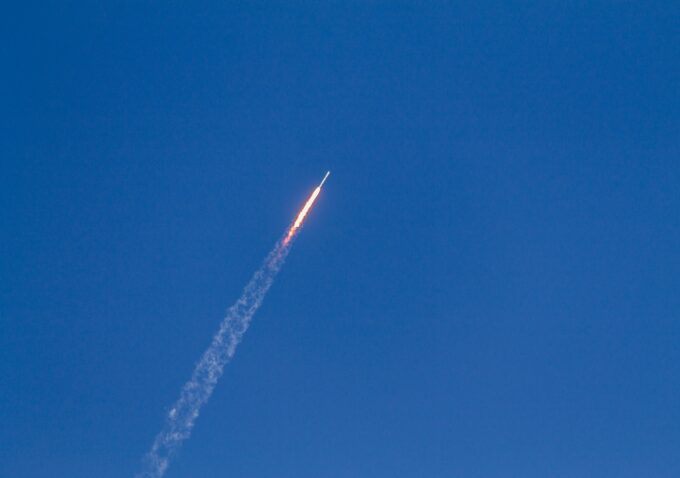
“How many seats need to be on a rocket ship to carry people worth a trillion dollars? An answer to this question will change over time, perhaps soon requiring only one seat if Musk continues to accumulate wealth at the same rate as he has done during the last two years.”
As of June 12, 2026, according to the Bloomberg Billionaires Index, only one seat would now be needed to hold Elon Musk, whose wealth has been put at $1.11 trillion after increasing $490 billion since the beginning of 2026 which is an amount that is greater than the total holdings of anyone else. (Many may now hope that Musk soon gets on a rocket ship and abandons the earth for good.)
Were Musk’s wealth distributed equally to the U.S. population of approximately 340 million, each person would receive over $3,200.
The size of Musk’s wealth of $1.11 trillion can be restated as $1,110 billion or $1,110,000 million. To describe his level of wealth as ridiculously and disgustingly obscene is a gross understatement of its wretchedness.
Much of the growth in Musk’s wealth has come in the form of an increase in the value of his stock holdings on which he has never paid taxes unless he has sold some of it for a gain. By contrast, homeowners often pay a hefty yearly property (wealth) tax on the value of their homes, even if much of the value on which they pay taxes consists of mortgage debt owed on their homes.
In the above 2022 article cited, I went on to write on the decreasing number of seats on a rocket ship required to hold people worth a trillion.
“Great progress has been made in reducing the number of needed seats. Using the Bloomberg figures, in the beginning of 2020, 16 seats were required. At the beginning of 2021, the number needed had declined to 9. The “good news” is that as of the end of 2022, the number has been further reduced to only 7. That represents more than a 50% reduction in just two years–an impressive rate of progress.”
Using the June 12, 2026, Bloomberg Billionaires Index figures, a rocket with enough seats provided for people worth $1 trillion would now require just one seat for Musk. A second rocket holding people worth one trillion would need four seats for Page (total net worth $306B), Brin ($285B), rocket man Bezos ($260B), and Ellison ($238B). A third rocket would need only six seats for Dell ($213B), Zuckerberg ($202B). Huang ($170B), two Waltons ($148B and $145B), and Buffet ($146B).
While sixteen seats were needed on one rocket in 2020 to hold people worth a trillion, eleven seats are needed on three separate rockets to hold people worth over $3 trillion. And a fourth rocket holding U.S. citizens worth a trillion would need only eleven seats! What progress?
Reducing Wealth Inequality
Should a healthy society allow any individual to accumulate one billion or even one hundred million dollars while others must endure inadequate food, housing, and health care, and can’t afford to provide for the needs of their children? Does any individual need the quantity of money now held by the super wealthy? If your answer is no, then confiscatory policies need to be enacted to use the wealth seized to benefit and fill the needs of the majority of the population. Mild wealth taxes of 1-5%/year will likely have an inadequate impact on reducing inequality since the yearly increase in the wealth of the wealthiest has often been greater than the proposed size of the tax.
Update: The June 17 Bloomberg Billionaires Index now places Musk’s wealth at $1.26 trillion which is over $900 billion more than the second wealthiest individual, Larry Page whose wealth is $310 billion. Musk’s level of wealth is greater than the combined wealth ($1.096 trillion) of the next four wealthiest individuals in the world.
The post Musk is a Trillionaire and Wealth Concentration in the U.S. Remains Solidly Entrenched appeared first on CounterPunch.org.
This content originally appeared on CounterPunch.org and was authored by Rick Baum.