
María Pérez lost power for about three months after Hurricane Maria struck Puerto Rico in September 2017. Her home in Salinas, on the island’s southern coast, sits near a river. As the hurricane knocked out the island’s grid and sent rainwaters surging down from the mountains, Perez’s house flooded with a swirling mix of muddy water and animal feces, rising 3 feet high and warping the hallways. For the next three months, she went without power as she cleaned out the home and began the long process of rebuilding.
Five years later, when Pérez got word that Hurricane Fiona was expected to make landfall, she was prepared. This time, she and her family boarded up the doors and windows, sealed every opening with silicone, and evacuated to her daughter’s home, which lost power as the storm hit the island.
Pérez has a heart condition that makes heat dangerous for her. She relies on air conditioning to stay cool, especially during the long summer months when temperatures can top 90 degrees Fahrenheit and the air is thick with humidity. With no power after Fiona, her health was once again at risk.
The experiences cemented something in her: She needed electricity she could count on, independent of a grid that not only collapsed during storms but also carries the highest rate of outages in the country.
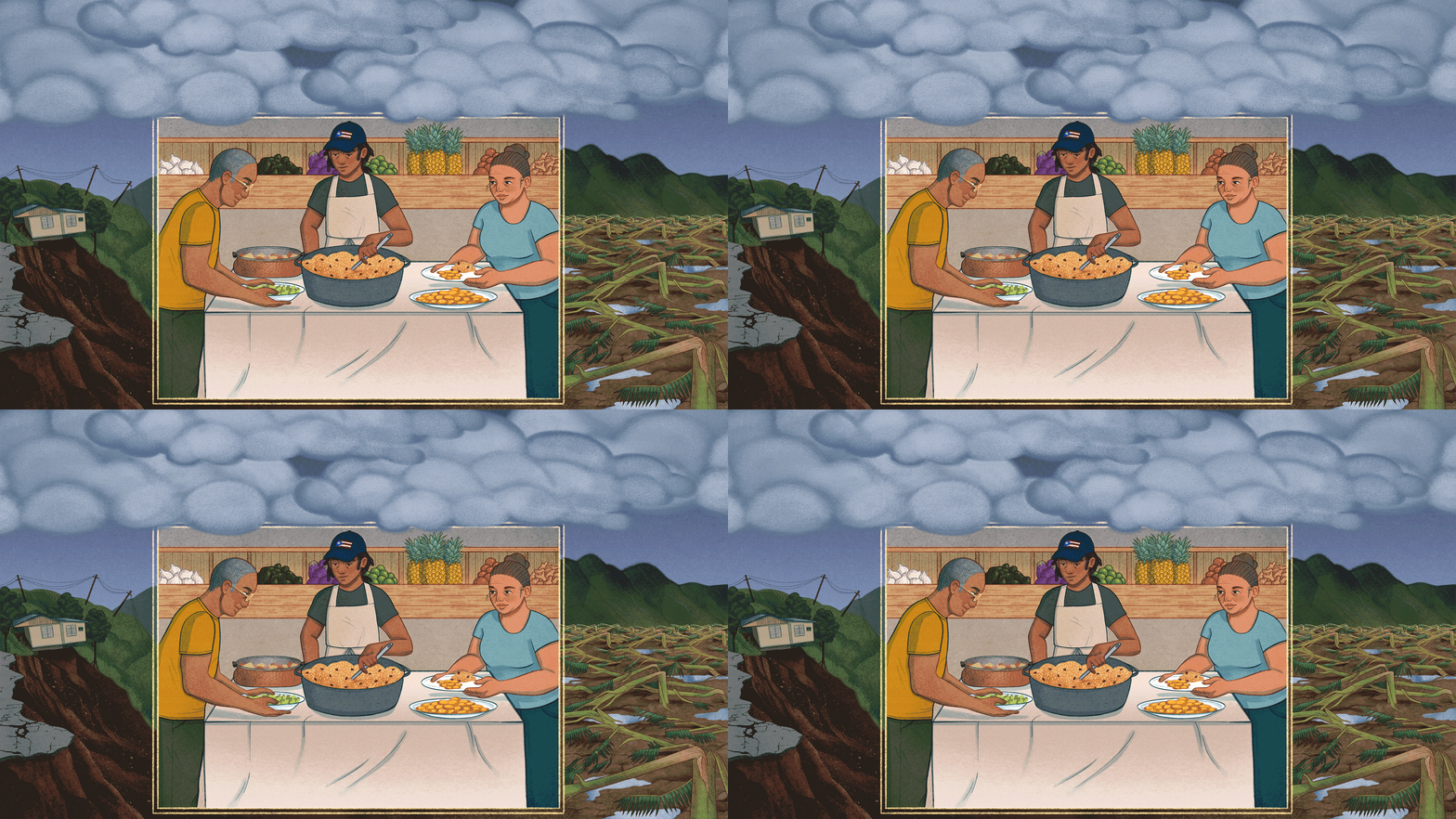
So when she learned more than a year after Fiona that the U.S. federal government would make solar panels and battery storage available to low-income Puerto Ricans and people with medical conditions, she jumped at the chance. Over the next couple of years, she gathered documents proving she owned her home, submitted financial records showing she and her husband lived on $900 a month in Social Security payments, and hosted multiple visits from solar company representatives who measured the property, inspected the electrical setup, and assessed the feasibility of installation. She cleared every hurdle.
Then in January, the Trump administration announced it was terminating the program’s funding. Overnight, the prospect of a dozen solar panels and a battery system to safeguard her health — a future she had spent more than a year working toward — vanished.
“My turn was next,” Pérez told Grist. “It’s done in shifts, and I was next. Why did this happen?”
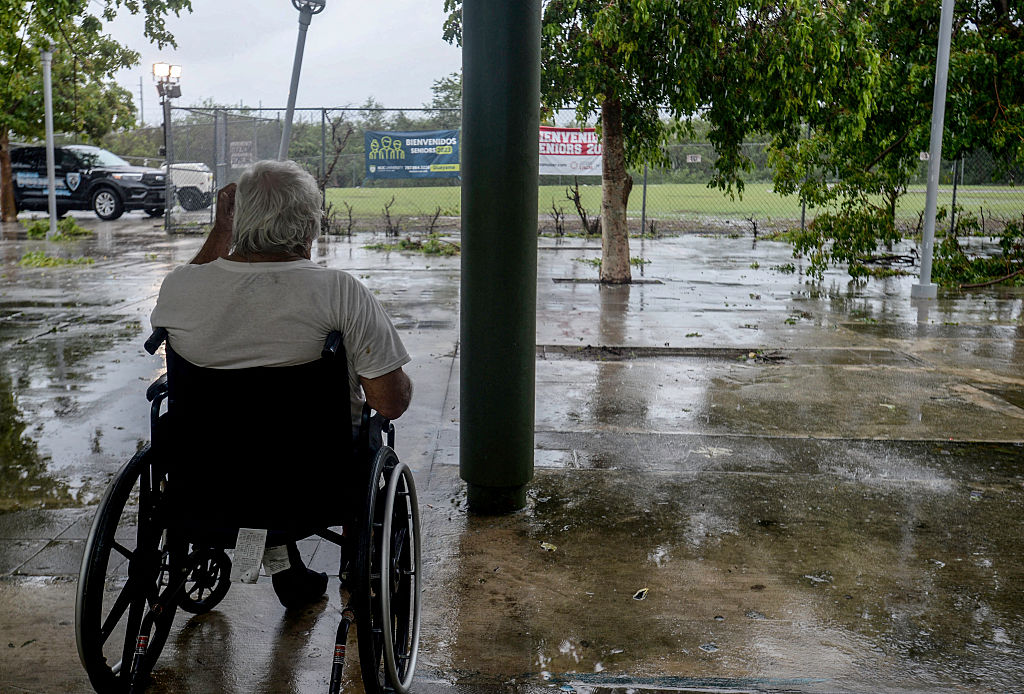
Pérez was one of up to 40,000 low-income or medically vulnerable Puerto Ricans who were expected to receive solar panels and battery systems through the Energy Resilience Fund, a $1 billion program established by Congress in 2022. President Donald Trump and his administration — with the help of the Puerto Rican governor — have chipped away at the effort since reentering office, initially pausing funding before permanently rescinding the payments over the course of the year. Just 6,000 solar and battery systems were installed before the money disappeared.
The Department of Energy has since redirected more than a third of the intended solar funding to the Puerto Rico Electric Power Authority, or PREPA, a government-owned utility with a checkered reputation on the island. The utility has for decades been plagued by chronic corruption and serial mismanagement, and for the last roughly nine years, it has been navigating bankruptcy proceedings, one of the longest utility bankruptcies in the country. PREPA also has a poor track record in effectively carrying out major improvement initiatives. After Hurricane Maria made landfall, Congress allocated more than $17 billion to modernize the island’s grid. But more than a decade later, PREPA has completed just 16 projects, spending less than $100 million of those funds. (Spokespeople for PREPA did not respond to a request for comment.)
The Energy Department earmarked its latest infusion of cash for “key emergency activities designed to address critical vulnerabilities across generation, transmission, and distribution systems.” It also arranged for the grant to be “noncompetitive” — meaning it didn’t solicit bids before reallocating the solar funding to the utility.
“Why would you cancel something that is working as intended and being executed, to give it to someone that has a bad history?” said one former Energy Department official, referencing PREPA. “Why are we risking these funds?”
Puerto Rico’s grid has long been fragile and unreliable. The island depends largely on imported oil, gas, and coal for generating electricity. Although its population centers are clustered in the north around San Juan, most of the power plants are located on its southern coast. A network of transmission and distribution lines crisscrosses through mountainous terrain to move electricity across the island.
When Hurricane Maria made landfall as a Category 4 storm, this network collapsed. High-speed winds twisted and flattened transmission towers. Substations flooded. Power lines snapped or toppled over, leading to the longest blackout in the country’s history. Every Puerto Rican on the island lost power. In fact, some residents in remote parts of the island went without it for nearly a year.
Most of the roughly 3,000 people who died as a result of Maria were not felled by the hurricane itself, but by the collapse of the grid and health care infrastructure. Diabetics who needed insulin didn’t have a way to refrigerate their medicine. Dialysis patients couldn’t get the routine treatment they needed. And those who depended on oxygen machines and ventilators lost access.
Estimates for repairing the island’s power lines topped $100 billion. Congress stepped in to provide funding, earmarking more than $15 billion to PREPA to rebuild its grid. The funding came at an opportune time for the utility. Just two months prior to Maria, saddled with $9 billion in bond debt and no clear path to paying it off, PREPA had filed for bankruptcy. With the infusion of federal cash, the utility now seemed to have the resources to both right its financial ship and rebuild a stronger grid in Maria’s wake.
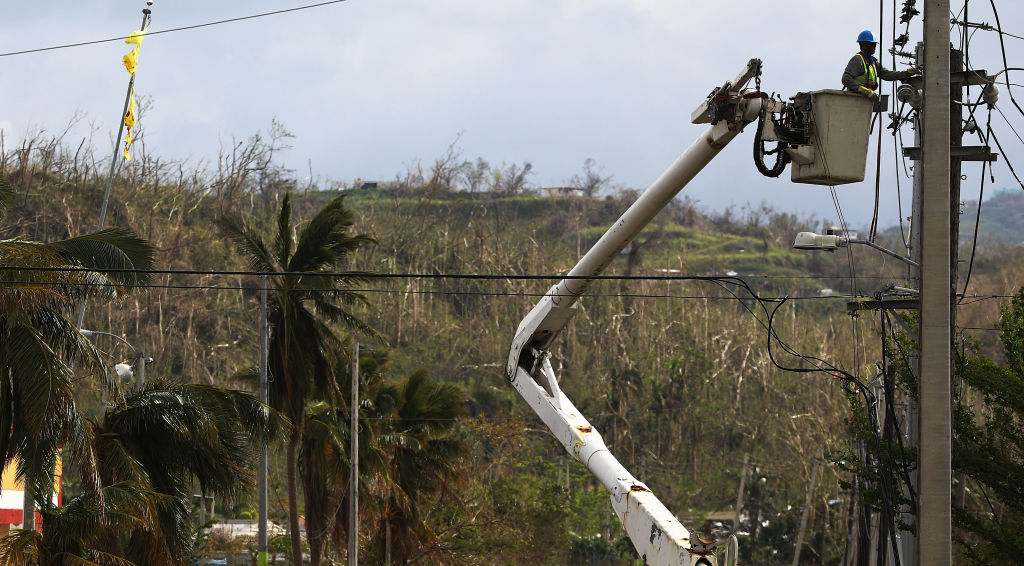
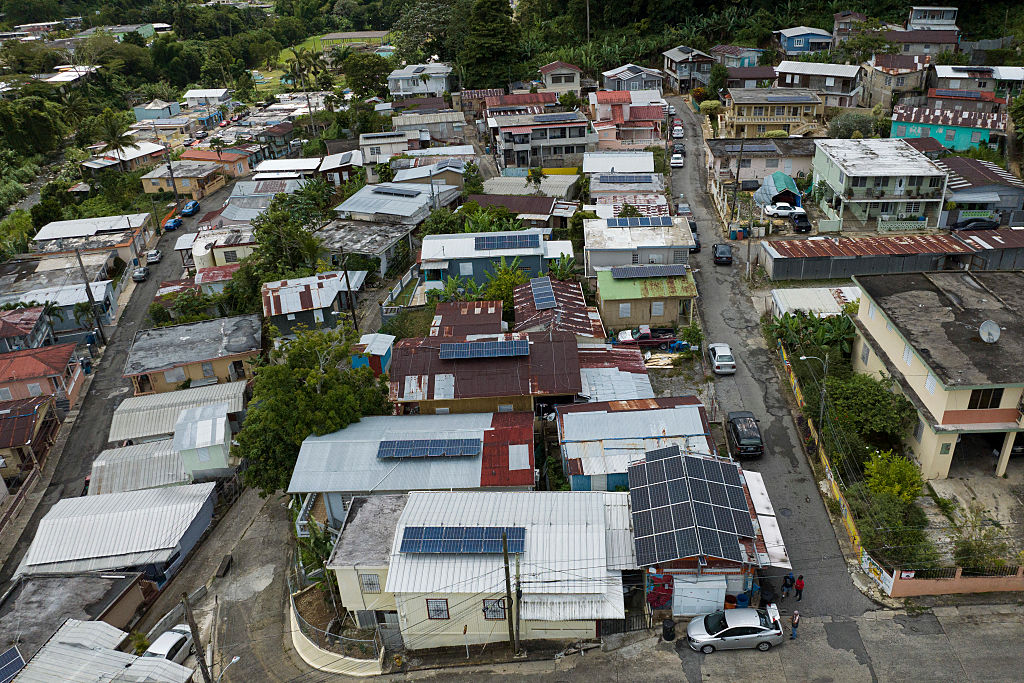
Four years later, that optimistic outcome was longer on the horizon. Outages continued to be common, the cost of electricity on the island was double the national average, and communities faced long lead times to restore service after storms and flooding. These problems continued even after PREPA contracted out the job of generating electricity to Genera, a subsidiary of the natural gas company New Fortress Energy, and the job of moving that power across the island to Luma Energy. Privatizing these efforts was pitched as a solution to the island’s grid woes, but in practice, neither company substantially improved reliability or affordability for Puerto Ricans. In response, a cadre of nonprofits, private solar companies, and wealthy Puerto Ricans began installing rooftop solar and battery systems. Within a year of Hurricane Maria, more than 10,000 new solar and battery systems were installed by private parties — nearly double the uptake in all the years prior combined. By early 2022, some 42,000 rooftop solar systems were enrolled in the island’s net-metering program.
When Hurricane Fiona hit, it put those solar systems to the test. By and large, those who had installed panels kept their lights on after the storm. Sunnova Energy, one of the major solar installers on the island, reported that 97 percent of its 30,000 customers had access to power in the days after the storm. That included fishermen who required electricity to refrigerate their catch, hospitals and fire stations that had set up solar for backup power, residents in remote parts of the island, and those who relied on power to operate medical equipment or refrigerate prescriptions.
The lessons from Fiona spurred lawmakers in Washington, D.C., to once again act. This time, with clear evidence of the resilience of a distributed energy system, new funding was specifically set aside for solar and battery systems for low-income Puerto Ricans and those who depended on electrical medical equipment. Led by the late Representative Raúl Grijalva, Congress eventually allocated $1 billion as part of an appropriations package “to carry out activities to improve the resilience of the Puerto Rican electric grid.” Jenniffer González-Colón, the governor of Puerto Rico, was then the resident commissioner for Puerto Rico, the island’s one non-voting member in the U.S. House of Representatives, and championed the effort alongside other congressional members.
The task of interpreting the language in the appropriations package and disbursing the new funds fell to the Energy Department, which was helmed at the time by Jennifer Granholm, a Democrat appointed by then-President Joe Biden. Although Congress had said the money could be spent to assist low-income households with purchasing solar and battery systems, it did not mandate that this be the only use. To clarify, Energy Department officials began discussions with the lawmakers who had championed the funding and made clear the money was intended to be used for distributed solar systems, according to people involved in those conversations, who requested anonymity for fear of jeopardizing their current employment.
As the agency was weighing important questions about the implementation of the program, Grijalva and other lawmakers sent a letter to Secretary Granholm in April 2023, emphasizing the role solar and battery systems had played in keeping lights on during Hurricane Fiona. “Residential solar and storage systems are critical lifelines when Puerto Rico’s power grid fails during natural disasters,” the letter said. It encouraged the department to consider “solar power and storage for individual households” and to “prioritize low-income people with disabilities.”
Congress’ intent was not to duplicate existing federal efforts to repair the grid and strengthen the island’s energy systems, which were already funded to the tune of $20 billion thanks to the aid made available post-Maria. Instead, it wanted the agency to use the new $1 billion to “ensure that the most vulnerable households have access to localized power and backup battery storage,” said one of the Energy Department officials who attended the meetings with Grijalva and other lawmakers, including Representatives Alexandria Ocasio-Cortez, Ritchie Torres, and Nydia Velázquez.
The goal was to ensure that “if something else happens, another storm, another long-term outage happens while the long-term reconstruction is taking place, we don’t see what happened after Maria,” they added.
The Energy Department immediately began designing programs to distribute the funds, identify local partners, and issue awards. It set up three main initiatives: About $490 million was directed to Sunnova Energy and Generac to install solar and battery systems for low-income households, especially residents reliant on powered medical devices or those living in areas prone to outages. Another $48 million was awarded to four nonprofits — Barrio Eléctrico, Environmental Defense Fund, Let’s Share the Sun Foundation, and Solar United Neighbors — to deploy up to 2,000 residential solar and storage systems for low-income Puerto Ricans with health issues. Another $365 million was awarded to solar companies and nonprofit groups to install solar and battery systems at community health care facilities and community centers. It took the better part of 2023 and 2024 to establish all three programs and begin disbursing funds.
Just as some of the funding began flowing, Trump won his second term as president, vowing to undo Biden’s climate programs. Within a year, all three Puerto Rican solar initiatives were gone.
Governor González-Colón’s position had shifted by then, too. In a separate press release the same day announcing the reallocation of funds to PREPA, she said that the Trump administration had prioritized the energy needs of Puerto Rico, and that the island could not rely “on piecemeal approaches with limited results.” (A spokesperson for the governor’s office did not respond to a request for comment.)
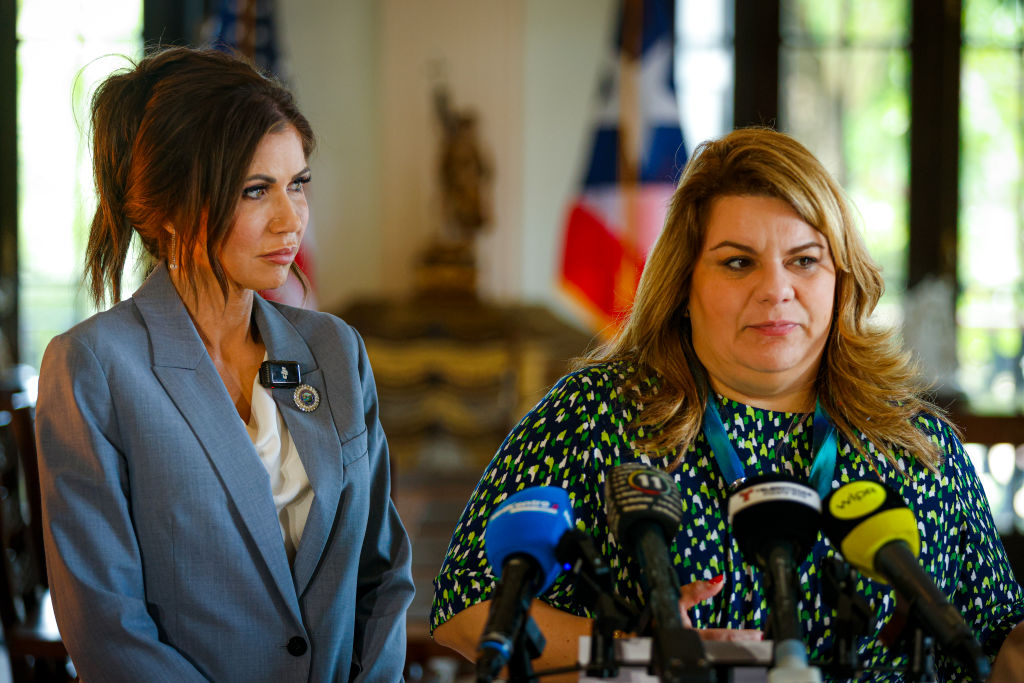
The final nail in the coffin came in January when the Department of Energy announced in an email that it was cancelling $350 million in grants to set up systems for low-income households. “The electric system of Puerto Rico cannot afford to operate with more distributed solar,” the agency said. The funds haven’t officially been redirected to PREPA, but former DOE officials said the money will likely also end up in the utility’s coffers.
A spokesperson for the Energy Department shared a link to a webpage with answers to frequently asked questions about the fund. The page, which was created six days after Grist first inquired about the funds, states that the department’s goal is to provide reliable power “for the greatest number of Puerto Ricans and provide a quicker end to the energy emergency.” By repairing existing fossil fuel power plants and modernizing the grid, “all 3.2 million residents, including low-income and medically vulnerable households, experience more reliable power,” the website notes.
The page also states that it did not make the decision to cancel the solar programs lightly and said continuing to fund rooftop solar would “exacerbate reliability issues with the distribution grid and only cover a very small segment of the population.”
While high levels of distributed solar can create grid management challenges, there’s little evidence that the uptick in rooftop solar installations has worsened the island’s grid reliability.
When Wanda Ríos first learned about the $1 billion program, she knew it would benefit her neighbors in Salinas — and specifically the La Margarita community, where a majority of the residents are elderly and face significant health challenges. More than 80 percent of the homes in La Margarita, like that of María Pérez’s, are in a FEMA-designated floodplain. Every time the water levels rose, the power went out. At the time, just five houses out of around 300 in the neighborhood had battery and solar systems.
“Because we have the river, everything gets shut down,” she said. “And that’s why it was important that everybody produce their own energy in their own house.”
Ríos, who is a community organizer and leads the AbeynoCoop, an energy cooperative that has been trying to improve access to solar and battery systems in Salinas, began work securing federal funds in 2023. She got in touch with David Ortiz, a senior program director for Puerto Rico at Solar United Neighbors, a solar advocacy group. Together with other partners, they applied for a $6 million grant from the Energy Department’s pool. The funding would be sufficient to install about 150 solar systems in Salinas.
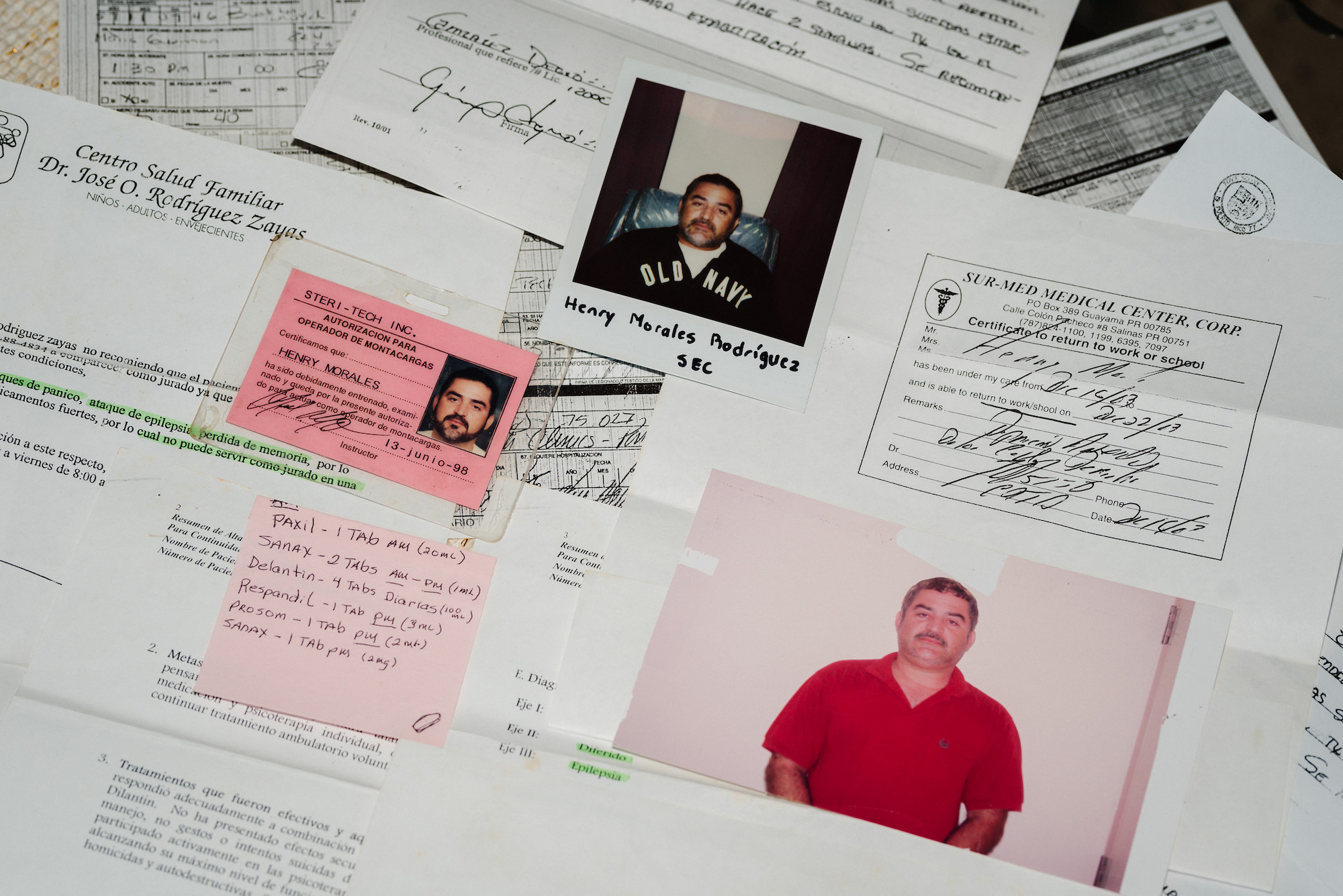
By the winter of 2023, they learned the agency was awarding them the grant, but the work that followed to finalize it was immense. Ortiz, Rios, and their partners in the work had to identify community members who needed the systems and develop budgets estimating the cost of work. That meant knocking on doors and convincing residents that the systems could help them, and that they should take the time to collect the various financial and medical documents needed to qualify. It took more than a year to get everyone on board.
But over the course of last year, the program came to a standstill. Ortiz needed a final green light or sign-off on a new budget and updated program costs, but he couldn’t get the agency to set up a meeting — let alone begin installing panels.
“In our case, and in another grantee’s case, we both hadn’t started installing because we had been waiting for a very long time to try to get the meeting for definitization to happen,” said Ortiz, referring to one of the last steps in the project approval process.
Then, out of the blue, a letter arrived in January informing Solar United Neighbors that their grant was being terminated. The news was devastating. Ríos had to announce the termination on Facebook. “People were pretty sad,” she said. “We were wasting their time for two years.”
Ríos had turned away from other opportunities to pursue grants, she said, because federal rules prevented her from applying to different sources of funding for the same project. The residents who signed up with Solar United Neighbors, too, hadn’t known they should be looking into other options to secure their energy systems.
“They probably have another opportunity to get a system, but they didn’t because they trust me, they trust Abeyno Coop,” Ríos said.
Solar United Neighbors is being represented by Lawyers for Good Government, a nonprofit advocating for organizations that have lost federal funding over the past year under the Trump administration, and Earthjustice, an environmental group. For her part, Pérez isn’t giving up. She’s determined to finance the system herself with the help of grants from nonprofits and other private entities. She has been calling solar companies to estimate what it might cost and working with Ríos’ cooperative to find alternatives.
“I’ll find a way, because I’ve always been a salesperson,” she said.
Benton Graham contributed reporting to this story.
This story was originally published by Grist with the headline Solar was poised to help Puerto Ricans survive blackouts — until Trump axed nearly $1B in funding on Apr 2, 2026.
This content originally appeared on Grist and was authored by Naveena Sadasivam.