
COMMENTARY: By Audrey van Ryn
Museums around the world present the story of war in different ways. The Imperial War Museum in London includes military history, the Holocaust, women’s roles in the two world wars, wartime artwork and the political issues of the time.
This museum records both civilian and military experiences, looking at the impact of war on people’s lives. Its Crimes Against Humanity section has a continuous film about genocide and ethnic violence in our time.
The Dutch Resistance Museum in Amsterdam focuses on the Dutch experience during the occupation of the Netherlands by Nazi Germany during World War Two, and features personal stories of those who lived during that period.
- READ MORE: Up close and friendly with Vietnam’s war resistance Củ Chi tunnels and museum
- Scars on the Heart exhibition at Auckland Museum
- Museum’s attempt to show ‘both sides’ of the Second World War
- Nuclear-Free Pacific exhibition opened – calls for inspired peace and regionalism
National museums in India, Pakistan, and Bangladesh musealise the memory of the 1947 Partition in different, selective ways, with oral history, survivor testimonies, and personal artefacts to document the displacement and trauma of the subcontinent’s division.
How does our own war museum remember war?
Visitors to Auckland’s War Memorial Museum find that the top floor is dedicated to the memory of New Zealand soldiers killed in World Wars One and Two.
The WWI Hall of Memories contains a sanctuary, used for commemoration. In this space are medals and badges of units in which men and women from the Auckland Province served, and British badges that acknowledge those who joined British units.
Roll of honour
In the WWII Hall of Memories, carved into marble is the permanent roll of honour of men and women from the Auckland Province who died in both World Wars, and in Korea, Malaya, Borneo and Vietnam.
The Scars on the Heart exhibition covers New Zealand’s civil wars of the 1840s and 1860s, the Anglo-Boer War, the First and Second World Wars, the Asian wars and New Zealand’s involvement in United Nations peacekeeping missions. Items on display include letters, diaries, photos, clothing and firearms.
There is a recreation of a bivouac shelter at Gallipoli and a Western Front trench from WWI.
This year, the greatest number of active armed conflicts since the end of the Second World War is taking place. The Doomsday Clock was set at 85 seconds to midnight on January 27 — the closest it has ever been to midnight.
Funding for nuclear weapons programmes is increasing and the New START treaty, the nuclear arms reduction treaty between the United States and Russia has expired, with US President Donald Trump having no interest in renewing arms limitation agreements.
Remembering the destructive and tragic consequences of war should be central to the role of museums in their telling of stories about war. However, unfortunately, around the same time as the recent removal of asbestos from the museum, some of these vital stories have been removed.
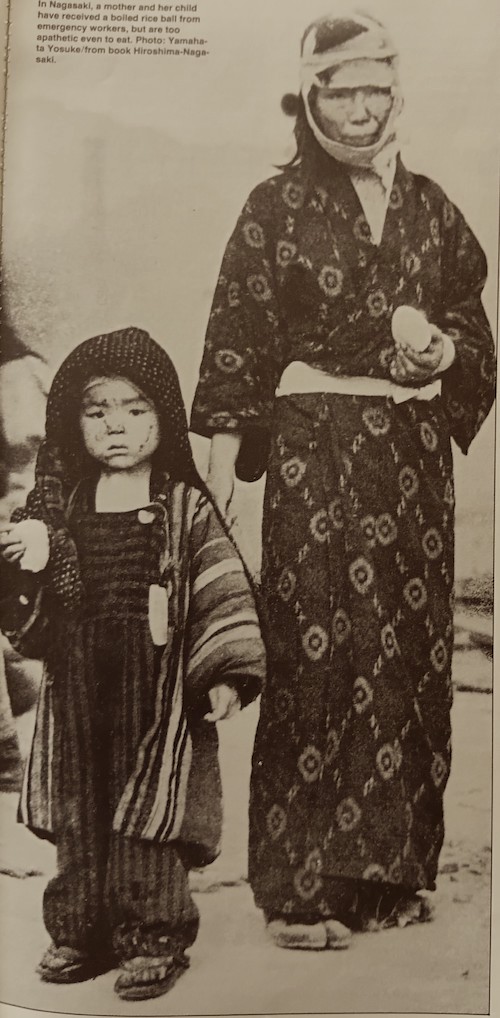
They include evidence of civilian war trauma installed in the 1990s by then head curator Lieutenant-Colonel Chris Pugsley to show impacts of war on civilians. Another removal has been the 1968 “Letter from a Vietnam Hospital” by the New Zealand surgeon and surgical team leader in Vietnam, Dr Peter Eccles-Smith, and a photo of a woman and a child who were victims of the Nagasaki atomic bomb in 1945.
No record of NZ nuclear protests
There is also no longer any text or photos showing New Zealand’s official protests against French nuclear testing at Moruroa Atoll in the South Pacific.
In addition to the reinstatement of these particular items, a more encompassing telling of stories about war at Auckland Museum than at present could include the portrayal of New Zealand’s resistance to international wars, the work of civilian and army medical personnel, photos of injured soldiers and civilians, photos and placards of anti-war demonstrators, stories of conscientious objectors, portrayals of victims of the atomic bombs in Hiroshima and Nagasaki, and photos and stories about the nuclear-free movement in NZ and the Pacific, including the fateful journey of Greenpeace’s Rainbow Warrior across Oceania into Auckland Harbour.
Auckland Museum’s 2025 plan included “Enabling commemoration opportunities to reflect the community while exploring themes of conflict and peace; and commitment to broadening our commemorative narrative to be inclusive of diverse experiences and events relevant to our communities.”
This year is 30 years since the International Court of Justice declared that the threat or use of nuclear weapons would generally contradict international law. Next year, 2027, will be the 40th anniversary of NZ’s nuclear-free legislation, a fitting time for Auckland Museum to launch an exhibition that could include NZ’s official and civil society opposition to nuclear weapons.
Veteran peace activists hope to forge a constructive working relationship with Auckland Museum to help portray people’s experience of war more fully, and create a peace gallery to tell the story of NZ’s peace history.
Audrey van Ryn is a peace activist and writer. In 2009, she created the Auckland Peace Heritage Walk on behalf of the United Nations Association of NZ. She is currently secretary of Community Groups Feeding the Homeless.
- If interested, please contact Dr David Robie of the Asia Pacific Media Network
This content originally appeared on Asia Pacific Report and was authored by APR editor.