
ANALYSIS: By Ronny P. Sasmita
The skies over Tehran and Natanz may still carry the lingering haze of joint US-Israeli bombing operations.
Yet the world, filtered through the dominant lens of Western media, continues to be fed a singular narrative: the latent danger of Iran’s uranium enrichment, perpetually described as being “one step away” from a nuclear warhead.
Amid economic sanctions, UN Security Council resolutions and preemptive military strikes that have devastated Iran’s civilian and military infrastructure, there exists a deafening silence surrounding the Middle East’s most tangible arsenal of weapons of mass destruction: Israel’s nuclear stockpile.
- READ MORE: Al Jazeera’s defence editor Alex Gatopoulos explains how things stand in the war on Iran
- Trump says wants to take Iran’s oil — Kuwait power site hit
- Other US-Israel war on Iran reports
In reality, the region’s security architecture is not threatened by a nuclear capability that might exist in the future, but by one that has existed for more than six decades.
In Israel’s Negev desert stands the Dimona complex — a black box untouched by International Atomic Energy Agency inspections, immune to sanctions and maintained as one of the international community’s most tightly guarded open secrets.
This contradiction represents perhaps the most blatant manifestation of global double standards, preserving Israel’s nuclear privilege above international law.
History shows that Israel’s nuclear ambitions were not merely a reaction to external threats but part of a broader geostrategic design to secure regional hegemony. Since David Ben-Gurion articulated the post-Holocaust doctrine of “Never Again,” nuclear capability has been framed as the Samson Option — a last-resort deterrent ensuring Israel can devastate the region if its existence is threatened.
View this post on Instagram
Bombshell deception
Yet this privilege did not emerge organically. It was constructed through deception, clandestine procurement networks and sustained diplomatic protection from great powers — the same powers that now present themselves as global guardians of nuclear non-proliferation.
Israel’s success in maintaining its status as the Middle East’s sole nuclear power rests on its policy of amimut, or nuclear opacity. Through this doctrine, Israel enjoys the strategic advantages of nuclear deterrence without incurring the political or economic costs.
This has fundamentally distorted regional discourse. The world is compelled to treat with alarm a state that formally adheres to the Nuclear Non-Proliferation Treaty, albeit under scrutiny, while tolerating another that refuses to sign the treaty and is widely believed to possess hundreds of nuclear warheads.
The turning point that legitimised this international hypocrisy came in 1969. In a secret White House meeting, US President Richard Nixon and Israeli Prime Minister Golda Meir forged an understanding that would shape US foreign policy for decades.
Washington would cease pressuring Israel to sign the NPT or allow inspections of Dimona, provided Israel maintained a low profile and refrained from overt nuclear testing.
In effect, the US became a diplomatic shield for Israel’s undeclared nuclear weapons programme — an irony for a country that has repeatedly invoked nuclear concerns to justify interventions elsewhere.
This marked a stark departure from the era of John F Kennedy, the only US president willing to confront Israel’s nuclear ambitions directly. For Kennedy, nuclear proliferation was a personal nightmare threatening global stability.
He warned Ben-Gurion that US support could be seriously jeopardised if independent inspections of Dimona were not permitted. Following Kennedy’s assassination in 1963, such pressure evaporated under the Johnson and Nixon administrations, replaced by a pragmatic accommodation that allowed Israel’s “bomb in the basement” to quietly expand.
This privilege has enabled Israel to develop an advanced nuclear triad:
- Jericho ballistic missiles;
- modified F-15I fighter jets; and
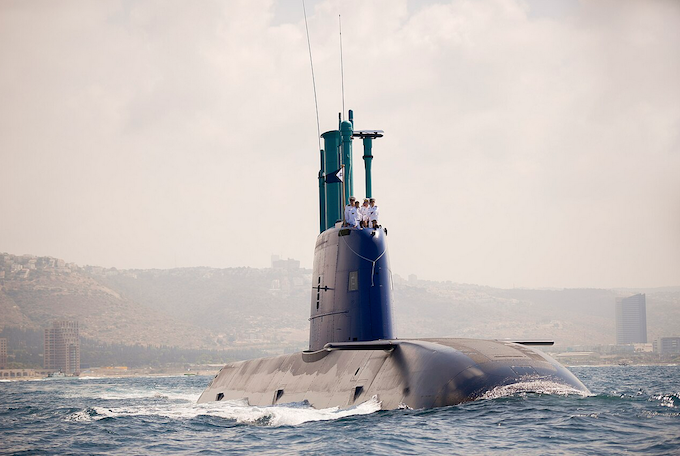
- Dolphin-class submarines capable of launching nuclear-armed cruise missiles.
With estimates ranging between 90 and 400 warheads, Israel possesses not only a deterrent but a potent instrument of diplomatic coercion.
When Arab states, led by Egypt, have consistently called for a weapons of mass destruction-free zone in the Middle East, the US and its allies have routinely blocked such initiatives to preserve Israel’s exceptional status.
This nuclear privilege has also created what many non-Western diplomats describe as a compliance trap. States like Iran, signatories to the NPT, face intense scrutiny and economic punishment for procedural deviations.
Meanwhile, Israel — operating outside the framework of international law — enjoys access to the most advanced military technologies from the West. This systemic inequity fuels instability, signaling that the most effective path to avoiding international pressure is not compliance but power.
Architecture of sabotage
To maintain its nuclear monopoly, Israel has pursued an aggressive geostrategic doctrine that routinely violates the sovereignty of other states. Known as the Begin Doctrine and formalised in 1981, it asserts that Israel will not allow any Middle Eastern country to acquire weapons of mass destruction.
This is an extraordinary claim of authority: a state with undeclared nuclear weapons asserting the right to destroy the nuclear capabilities of others, even those intended for peaceful purposes, under the banner of “self-defence”.
Its first manifestation came with Operation Opera on June 7, 1981, when Israeli fighter jets destroyed Iraq’s Osirak nuclear reactor. Despite UN condemnation, the precedent was set: Israel effectively assumed the role of the region’s unilateral nuclear enforcer.
This pattern was repeated in 2007 with Operation Outside the Box, which destroyed Syria’s Al-Kibar facility. These preemptive strikes were driven by a clear calculation that major global powers would continue to grant Israel impunity, regardless of overt violations of international law.
Against Iran, this architecture of sabotage has reached unprecedented levels of sophistication and lethality. Over the past two decades, Israel has waged a shadow war involving the assassination of nuclear scientists in Tehran — sometimes using remotely operated weapons — as well as cyberattacks such as Stuxnet, which crippled thousands of centrifuges at Natanz.
These operations have often been conducted in close coordination with US intelligence, underscoring how Western non-proliferation policy has frequently functioned as an instrument to preserve Israel’s military dominance.
The escalation culminated in the Rising Lion campaign in 2025 and Operation Epic Fury in 2026. Backed by the Trump administration, Iran’s nuclear infrastructure has been targeted through large-scale airstrikes that largely disregarded the risks of radiation exposure to civilians.
Israel justified these actions by claiming that diplomacy had failed.
Yet this narrative omits a critical reality: Israel has consistently undermined diplomatic efforts, including by seizing Iran’s nuclear archives in 2018 to help justify the US withdrawal from the JCPOA.
The objective has never been merely to prevent an Iranian bomb but to preserve Israel’s monopoly on power.
Shadow alliance
The portrayal of Israel as a small, self-reliant state under constant siege is a carefully constructed myth. The history of its nuclear programme is one of covert international collaboration involving countries that now lead global anti-nuclear campaigns.
Without technological assistance from France, heavy water supplied by Norway via the United Kingdom and uranium sourced from Argentina, the Dimona facility would never have materialised.
France, now a vocal critic of Iran, played a central role by supplying a reactor and a plutonium reprocessing plant in 1957, partly as repayment for Israel’s support during the Suez Crisis.
Even more striking was Israel’s nuclear collaboration with apartheid South Africa in the 1970s. As two internationally isolated regimes, they developed deep military ties. Declassified documents suggest that Israel’s Shimon Peres once offered to sell nuclear warheads to Pretoria.
This partnership likely culminated in the 1979 Vela Incident, when a suspected atmospheric nuclear test was detected in the Indian Ocean. Despite strong evidence pointing to a joint Israeli-South African test, the Carter administration chose to obscure the findings to protect its ally.
Such collaborations demonstrate that, for Israel, international norms are secondary to strategic imperatives. While aiding a racially segregated regime’s nuclear ambitions, Israel simultaneously leveraged its diplomatic influence to block cooperation between its adversaries and other states.
This pattern persists today in the form of cyber and surveillance technologies exported to authoritarian regimes in exchange for diplomatic support.
Western backing has also extended to high-level intelligence operations to secure nuclear materials. In the 1968 Plumbat Affair, Israeli intelligence reportedly hijacked 200 tons of yellowcake uranium through a front-company scheme involving a cargo ship in Antwerp.
Rather than triggering sanctions or legal consequences, the operation was widely regarded as a remarkable intelligence success. Over time, the international community normalised such state-level misconduct, creating a skewed moral framework in which the security of one nation is deemed more important than the integrity of international law.
Deep double standard
Today, when the international community speaks of nuclear threats in the Middle East, the subject is invariably Iran. Yet the most immediate and substantial threat — Israel’s nuclear arsenal — remains untouchable.
This double standard has evolved into a kind of doctrine in global diplomacy, in which allegiance to Israel’s security necessitates the suspension of logic and justice. How can a state with hundreds of unmonitored nuclear warheads be framed as a stabilising force while another under strict IAEA oversight is cast as an existential threat?
This hypocrisy is especially evident in the NPT’s application. Intended as a universal instrument, it has instead functioned in the Middle East as a mechanism to constrain Arab states and Iran while allowing Israel to expand its nuclear capabilities unchecked.
The US has consistently used its veto power in the UN Security Council to block resolutions targeting Israel’s nuclear programme. Such policies not only undermine Washington’s credibility but also erode the very foundations of international law. When laws apply only to the weak, they become instruments of domination rather than justice.
Middle Eastern security will not be achieved through bombing Natanz or assassinating scientists in Tehran. As long as Israel is permitted to maintain its nuclear monopoly under the protection of Western double standards, the region will remain locked in a cycle of proliferation pressures.
Saudi Arabia, Turkey and others will inevitably seek their own nuclear capabilities to counterbalance Israeli dominance. Israel’s strategy of “mowing the grass” may delay conflict, but cannot resolve it.
The time has come for the world to stop feigning ignorance about Dimona. Any serious conversation about peace in the Middle East must begin with dismantling Israel’s nuclear privilege and demanding universal transparency.
Without equal pressure on Israel to join the NPT and place its facilities under IAEA safeguards, the rhetoric of non-proliferation is little more than diplomatic theatre. Regional security can only be built on a foundation of equality, not under the shadow of a nuclear monopoly sustained by global hypocrisy.
Ronny P. Sasmita is a senior international analyst at the Indonesia Strategic and Economic Action Institution, a Jakarta-based think tank.
This content originally appeared on Asia Pacific Report and was authored by APR editor.