
For decades, Panama successfully cultivated a foreign policy posture of strict neutrality defined by its unique geography centered on the operation of the Panama Canal.
This small-state hedging strategy allowed Panama to welcome commercial presence from both the United States and China while maintaining the waterway’s treaty-based impartiality.
However, in early 2026, this equilibrium shattered. Following Trump’s victory last year Panama has exited China’s Belt and Road Initiative and already signaled its alignment with US security concerns, yet it has secured no binding commitment that Washington to make up for the loss of investment.
Moreover, after sustained pressure from Washington characterized by Trump 2.0 rhetoric and Senate resolutions declaring Chinese-backed investment a violation of the Neutrality Treaty, Panama’s Supreme Court annulled the 1997 concession of CK Hutchison’s Panama Ports Company to operate the strategic Balboa and Cristóbal terminals. By seizing these assets and documents, threatening personnel with criminal prosecution and handing temporary operations to Maersk and MSC, Panama abandoned its neutrality and became an active participant in US geoeconomic lawfare. The nation that once skillfully balanced Washington and Beijing now finds itself possibly investment and revenue-starved, as many investors now see the jurisdiction as high-risk.
Just prior to the de facto expropriation, CK Hutchison and its subsidiary launched arbitration proceedings through the International Chamber of Commerce, amending their claim in March 2026 to demand damages now estimated at approximately $2 billion. The company’s legal argument is that Panama Ports Company operated the ports since 1997, invested over $1.8 billion in infrastructure, and had its concession renewed in 2021 to run through 2047, with Panamanian audit authorities consistently confirming compliance with contractual terms.
Panama’s defense rests on a domestic constitutional ruling, but international investment law generally protects foreign investors from unlawful expropriation without prompt, adequate, and effective compensation. As the Panama Ports Company stated, the government’s actions constitute “radical breaches and anti-investor conduct,” and they “will not relent and they are not coming for some token relief.” If the ICC arbitration panel rules in favor of Hutchison, keeping in mind investor-state precedents often favor claimants, Panama faces a fiscal shock equivalent to roughly 2.5% of its GDP. Moreover, enforcement under the New York Convention could allow Hutchison to freeze Panamanian state assets abroad, from bank accounts to future canal revenues. This legal sword hanging over Panama’s economy is the direct result of forgoing its business-friendly neutral posture for the unpredictable terrain of US lawfare.
Beijing Strikes Back
While the arbitration process grinds forward over several years, Beijing has deployed immediate economic leverage to ensure Panama feels the sting of its decision. Contrary to initial analysis suggesting retaliation would be ineffective because Panamanian exports to China are minimal, China’s response has been strategically calibrated to target Panama’s investment pipeline and logistics stability rather than just trade flows. First, Beijing has instructed state-owned enterprises to suspend negotiations on all new business projects in Panama. This guidance puts potential investments worth billions of dollars at immediate risk, including infrastructure projects such as bridge construction, cruise terminals, and metro line extensions that Chinese firms had been pursuing. Second, Chinese customs authorities have tightened inspections on Panamanian imports in sectors sensitive in Panama. While these products represent a tiny fraction of Chinese imports, the delays and uncertainty create domestic political friction for the José Raúl Mulino administration.
Most significantly, China has leveraged its position as the second-largest user of the Panama Canal, accounting for 21.4% of cargo volume. Shipping companies have been instructed to consider rerouting cargo through other ports where feasible. While the canal retains structural advantages for certain routes, even marginal diversions by major Chinese carriers like COSCO Shipping—which has suspended Balboa operations and rerouted empty containers—translate directly into tangible revenue losses for the canal authority. In March 2026, the Chinese Ministry of Transport issued a formal and urgent summons to executives from Maersk and MSC in Beijing, a move widely interpreted by industry analysts as a direct threat of economic retaliation. This diplomatic pressure stems from the decision by Maersk’s subsidiary, APM Terminals, to take over operations at the Port of Balboa after the Panamanian government annulled the concession of the Hong Kong-based firm CK Hutchison. China has characterized this transition as a “hostile takeover” of its assets, warning that the shipping giants are facilitating an illegal seizure and may be liable to such actions. Beijing also signaled that Maersk could face severe regulatory hurdles or restricted access to Chinese ports if it continues to operate the disputed Panamanian infrastructure.
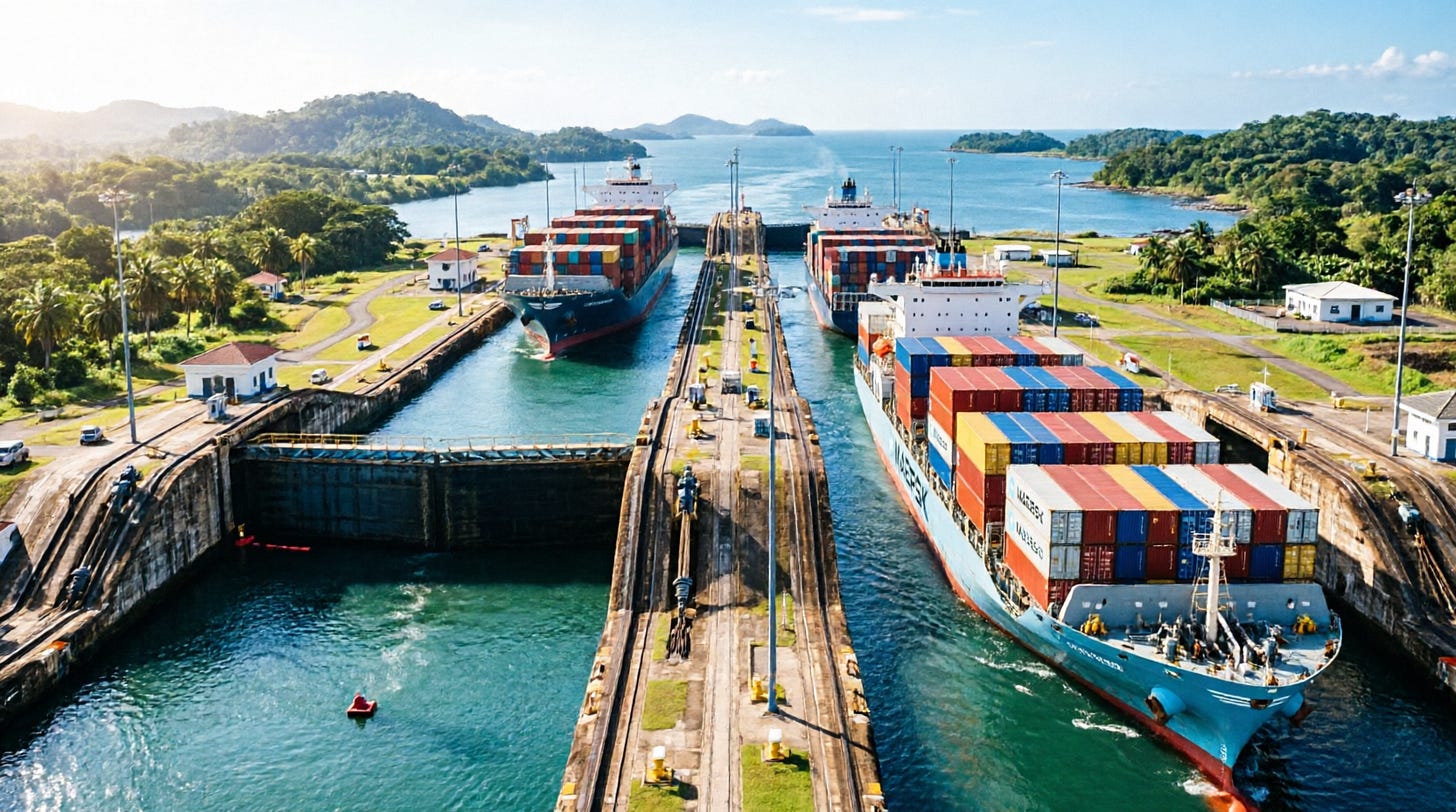
China’s response demonstrates the tools available to defend its overseas interests are international arbitration, trade scrutiny, investment freezes, and logistics adjustments. Panama’s miscalculation was believing it could serve as an instrument of US geoeconomic lawfare without consequence. Panama is now living the consequences of its abandonment of neutrality, and the international community is watching closely as the costs continue to mount. The precedent set by the Supreme Court’s retroactive annulment of a long-standing contract has sent a chilling signal to international investors as was predicted. What foreign entity will now commit billions to Panamanian infrastructure when 50-year contracts can be invalidated due to foreign political pressure? Many observers believe Panama has effectively poisoned its own well for future foreign direct investment.
Panama’s pivot represents a fundamental miscalculation about the nature of great-power competition. By seizing Chinese-linked assets under US pressure, the Mulino administration appears to have believed it could secure Washington’s favor without sacrificing its commercial relationships with Beijing. The United States has provided no guarantee of compensation for the $2 billion arbitration exposure, nor has it offered to underwrite the investment void left by frozen Chinese projects nor compensate for the trade decline. Washington’s geoeconomic lawfare, characterized by the push to reassert US dominance over strategic assets treats Panama as an instrument of policy rather than a partner.
- First published at Global Research.
The post Beijing Shows Panama the Cost of Abandoning Neutrality appeared first on Dissident Voice.
This content originally appeared on Dissident Voice and was authored by Miguel Santos García.