
The Media Council of Papua New Guinea (MCPNG) has condemned an alleged assault on a senior female reporter and called on the police to conduct a full independent investigation into the incident last Friday.
Council president Neville Choi also condemned the attack and threat against one of its own
members, saying reporters in Papua New Guinea must be “respected for the work that they do in informing and educating the public of what is happening around them”.
A statement at the weekend by the MCPNG detailed the circumstances of the attack and although the reporter was not named in the report, she was bylined in her news story about injuries suffered by prisoners in an attempted break-out at the Bomana jail near the capital Port Moresby.
- READ MORE: PNG Media Council calls for investigation after alleged assault of journalist
- PNG Media Council calls for investigation into assault of reporter by CS officers
The reporter, Rebecca Kuku, is an experienced reporter of The National daily newspaper.
Her article reported that “more than 50 remandees were injured, and nine hospitalised in what a top official described as a failed jail break” at the Bomana Correctional Service Institution on Monday, 23 February 2026. Photographs of some of the injured remandees were published with the article.
The MCPNG statement said “an attack on one journalist is an attack on the media industry”.
The statement said that the attack happened about 11am on Friday, February 27, as Kuku was about to enter Correctional Service headquarters to attend a Press conference.
‘Confronted by 5 officers’
“She was confronted by five Correctional Service male officers who questioned her about an article that she had reported on in relation to injuries sustained by prisoners at the Bomana Correctional Service facility,” the statement said.
“One of the CS officers punched the female reporter on her left ear, to which she reacted by pushing him away in self-defence, while another officer attempted to slap her across the face.
“Following the incident, the reporter returned to the office and reported the matter to her editor before filing a formal police complaint regarding the attack.”
“The unprovoked attack was in relation to a news article in The National carrying the reporter’s byline entitled “50-plus prisoners injured in ‘failed’ jail break.”
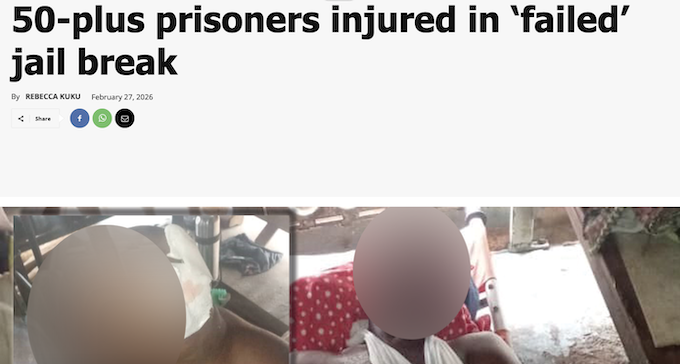
The MCPNG quoted a brief statement by The National newspaper management:
“The National merely reported a serious assault upon prisoners perpetrated, it has been confirmed, by warders.
“The Prime Minister has ordered an investigation. For warders to now assault a journalist is reprehensible and does nothing to improve the image of the service.
“We are fully supporting our journalist in filing a criminal assault case. We are calling on the CS command to look into this and discipline the officers responsible.
“We have lodged a complaint with the CS management. Regardless of this we will continue to report fairly all matters to do with CS including this incident.”
‘Damning evidence’
Since the incident, said the MCPNG, said it had received “damning evidence” which included Whatsapp messages and voice notes which reflected the “very worrying conduct of officers” within the Correctional Services.
The media council reminded the public that “freedom of the press is the fundamental right
of journalists and media organisations to report, publish, and disseminate information, news, and opinions without government censorship, intimidation, or undue restriction”.
President Neville Choi condemned the attack and threat, saying reporters in Papua New Guinea must be respected for the work that they do in informing and educating the public of what is happening around them.
He added that citizens not happy with a news report could raise a formal complaint with the MCPNG Media by writing to the council, or via its website complaints page.
In a comment reported by ABC News, Choi said public servants and authorities needed to understand the importance of journalists.
“We’re not here to point fingers at anybody, we’re here to report the facts and for our citizens to make more informed decisions and even for authorities to pay attention to what may be happening that they don’t know about.”
The National reported that Prime Minister James Marape had ordered a full investigation.
This content originally appeared on Asia Pacific Report and was authored by Pacific Media Watch.