

A US newspaper clipping, 9 February 1958 – Public Domain
In William Shakespeare’s play Julius Caesar, Mark Antony says the following at Caesar’s funeral: “The evil that men do lives after them; the good is oft interred with their bones”. This suggests that, after a person dies, anything good they did in their life is forgotten, but their mistakes or ‘evil’ actions, are remembered.
It seems that, today, the opposite is true. U.S. politicians who, in office, are vilified for their wrongdoings, at least by the independent press, are lauded once they die, sometimes even by that same press. The same is true of film stars, it seems.
Let us take, for example, Henry Kissinger, former U.S. Secretary of State and National Security Advisor, who is responsible for the deaths of millions of men, women and children. According to the National Security Archive, in an article entitled “Henry Kissinger, America’s Most Notorious War Criminal: “Even the most generous calculations suggest that the murderous regimes Kissinger supported and the conflicts they waged were responsible for millions of deaths and millions of other human rights abuses, during and after the eight years he served in the American government.” Yet when he finally died in 2023, this infamous legacy was not what was reported. We will review a few examples:
• The Guardian: The headline of Kissinger’s obituary says this: “US secretary of state with peerless diplomatic skills, tireless energy and a ruthless desire to protect his country’s interests.” The article does discuss some of his murderous policies, but also lavishes praise on his dedication to the U.S., and his ‘abilities’.
• FOX News: “Kissinger was praised by supporters as a brilliant strategist and condemned by critics as a master manipulator.” It is astounding that FOX couldn’t find any stronger criticism of a mass murderer than that he was a ‘master manipulator’.
• TIME Magazine: Praising Kissinger for détente with the Soviet Union and improved relations with China, TIME does mention, seemingly almost in passing, that “…his critics have argued that his policies contributed to millions of deaths by permitting heavy bombing in Cambodia and Laos, blocking the ascension of a democratically elected leader in Chile, genocides in East Timor and Bangladesh and civil war in southern Africa.” Other than that, Mrs. Lincoln, how did you like the play? The magazine praised him for his realism in guiding U.S. foreign policy, and noted his continued influence long after he ceased to have any official position in government.
These are just three examples, one each from an ostensibly ‘liberal’ publication, a conservative media outlet and a ‘middle-of-the-road’ magazine. Yet their evaluations of Kissinger do not differ much.
Now, we will look to another personality, one without the murderous history of Kissinger, but one who’s earlier and dubious ‘accomplishments’ were heavily discussed in her obituaries, while the ugly reality of her later statements was basically ignored.
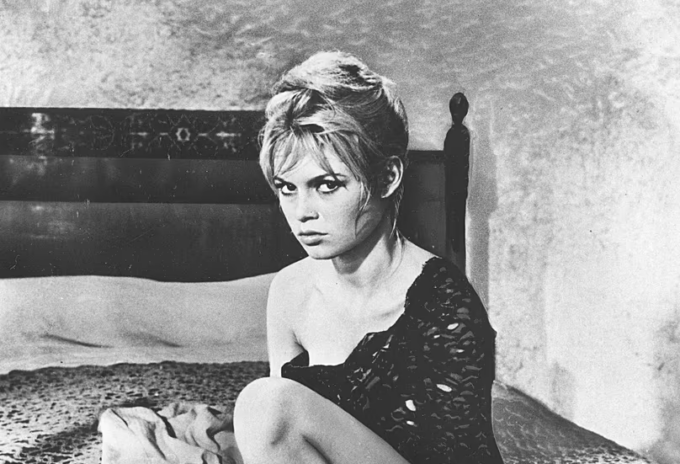
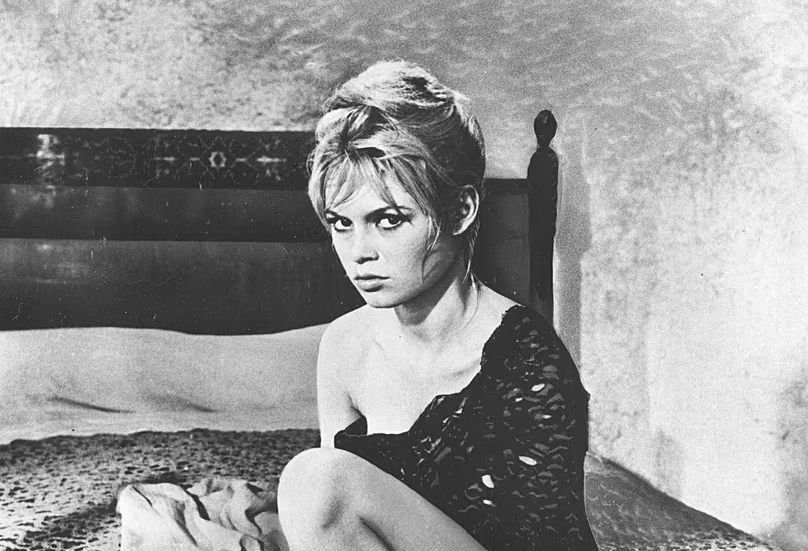
French ‘actress’ Brigitte Bardot died in late December, 2025. She was known more for her beauty, which was often almost completely exposed on screen, than for any acting ability. After making nearly fifty movies, she retired at the age of 39 to focus on animal rights. So far, so good; nothing major to criticize about someone capitalizing on their looks to make a living, or protecting and supporting animal rights. However, the situation does seem to deteriorate from there. The ‘good’ – such as it was – does not seem, as the Bard suggests, to have been ‘interred with her bones’, although it seems that the evil was.
We will again look at a few examples from her various obituaries.
• The Guardian (yes, again): The headline for the obituary reads as follows: “Film star who shot to fame in ‘And God Created Woman’ in the 1950s and later became a campaigner against animal cruelty.” Later the article states that “…she was also an incorrigible social conservative about race, homosexuality and immigration.” The editors at The Guardian apparently did not deem it necessary to report, as LeMonde did, that “…Bardot, the political figure, embodied racial hatred. Convicted five times for inciting racial hatred, Bardot remained, for three decades, an exception in French culture – the only celebrity to openly defend the far right.”
• FOX News (also again): The opening sentence of Bardot’s obituary is this: “Legendary French actress and animal rights activist Brigitte Bardot has died at 91, her foundation announced Sunday.” Nary a word about her anti-Islam statements, like this one: “I am against the Islamisation of France! Our ancestors, our grandfathers, our fathers have for centuries given their lives to push out successive invaders.”
• TIME Magazine (this writer is nothing if not consistent): TIME Magazine praised Bardot as a ‘bombshell’ and ‘activist’, but did mention, briefly at the conclusion of the obituary, that Bardot “… was also a vocal proponent of far-right politics in France. She decried Muslim immigration in public letters and in books, and she was repeatedly found guilty of provoking racial hatred.”
This writer does not wish to give the impression that he equates Henry Kissinger’s war crimes and crimes against humanity to the unhinged statements of an ‘actress’ famous more for her body than for her mind. But it puzzles him how so many media outlets and publications – and he has only provided a small sampling here – seem to wish to minimize the ‘evil’, as Shakespeare expressed it, and just stress any good that some people have done. One might say that Bardot’s movies were entertaining (this writer has never seen one and plans to die with that statement remaining true), so that might be evaluated as ‘good’, but there is little on Kissinger’s resume that could be construed as ‘good’ (détente with Russia? U.S. official recognition of the People’s Republic of China? Possibly), but it’s all overshadowed by his monstrous crimes against humanity.
But what’s a little genocide among friends? Kissinger was very popular, perplexingly, during the Nixon and Ford administrations, so why not let bygones be bygones, forget that he was responsible for the deaths of millions of people and unspeakable human-rights violations, and just focus on … well, anything else.
And as for Bardot? So she spent fifty years maligning and railing against members of the LGBTQ+ population, Muslims and others. Wasn’t she impressive to look at on the silver screen? Why consider anything else about her?
We have seen this same tendency with the deaths of any U.S. political figure, and will continue to do so. The press, after all, is a major tool of U.S. imperialism and domestic repression, and it will not bite the hands that feed it.
But let us not forget that the evil that men and women do does, in fact, live after them. Fawning obituaries cannot cover the mass graves dug by the likes of Kissinger, any more than flattering words about Bardot can erase her hateful racism. Those ‘evils’ are not gone; they live on in people who still support Kissinger-style policies, and they are encouraged by Bardot’s statements.
Let’s all try to look at people we constantly read about with a bit more objectivity than the press generally grants us.
The post Shakespeare, Kissinger and Bardot appeared first on CounterPunch.org.
This content originally appeared on CounterPunch.org and was authored by Robert Fantina.