
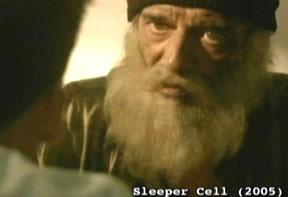
Still from “Sleeper Cell” (2005), reproduced in Reel-Bad Arabs: How Hollywood Vilifies a People by Jack Shaheen.
Absorbing the revelations in the book Regime Change by journalists Maggie Haberman and Jonathan Swan, I posed a question to my American colleague: Why do figures like Donald Trump continue to get elected? With his signature measured calm, he offered a chilling truth. He suggested that Americans have not felt history’s harsh winds blow with hurricane force since the Civil War, which has left our society dangerously naive and perilously unserious.
On the global front, many Americans are poorly informed about the geopolitical realities of other countries, particularly regarding West Asia. Consequently, they have historically been susceptible to Israeli-aligned narratives, allowing Zionist and pro-Israel influencers to disproportionately shape U.S. public opinion and foreign policy in Israel’s favor.
This dynamic applies especially to Iran, which has been severely impacted by the widespread consumption of a distorted and overwhelmingly negative narrative.
The American understanding of Iran is a triumph of geopolitical minimalism, reduced to a holy trinity of stereotypes: the veil, the beard, and the bomb. This trim, three-item checklist serves as the entire curriculum for a superpower that, despite boasting of the most powerful military on earth, treats one of humanity’s oldest and dynamic civilizations as a one-dimensional cartoon villain.
It is a masterpiece of intellectual efficiency. Decades of propaganda have deeply colored the  perception of Iran. Hence, the country is rarely associated with the staggering architecture of Isfahan and Persepolis, the deeply moving poetry of Rumi and Hafez, or with its millennia-old legacy as a sophisticated culturally vibrant civilization. Instead, the mind defaults to a monochrome
montage of ominous men with long beards and turbans chanting in the streets, anonymous women entirely obscured by black veils and a glowing apocalyptic nuclear weapon waiting to go off.
This reductionist view is not a tragic accident; it is the culmination of decades of headline-driven “diplomacy” and the relentless cable news machine. After all, nuance does not command military budgets, nor does it fit on a 24-hour news ticket. Stereotypes, however, have proven useful tools in relegating a nation of 93 million Iranians to a problem to be removed by force.
For example, the “veil” has operated as a symbol of cartoonish oppression, a one-size-fits-all visual that allows western politicians to pivot effortlessly to facile reductive rhetoric. The stereotypical “beard” has served as the embodiment of rogue state malevolence, projecting a timeless, medieval fanaticism.
Finally, the “nuclear bomb” rounds out the trinity of tropes. It acts as the ultimate powder keg that has been used to justify escalating sanctions and military attacks. It is a narrative that entirely ignores the complex realities of U.S. Congressional Research Service reports on Iran, that describe Tehran’s strategic posturing as primarily defensive in reaction to U.S.-Israel aggression.
For decades, the public has been served a steady diet of tropes, conditioning the public to view Iran as an ominous monolithic threat instead of a country, like any other, with internal nuances and problems.
When the veil, beard and bomb are stripped away, the lived experiences of Iranians contradict the comic artificial geopolitical framework that Washington and Tel Aviv have sold the public for generations.
Official Washington and its allies have insured that public perception of Iran remains stagnant. The three-item checklist has been doing the heavy lifting successfully for decades. It is the perfect American geopolitical souvenir: light to carry, simple to understand and completely useless for comprehending reality.
The post Iran: The Veil, the Beard and the Bomb appeared first on CounterPunch.org.
This content originally appeared on CounterPunch.org and was authored by M. Reza Behnam.