
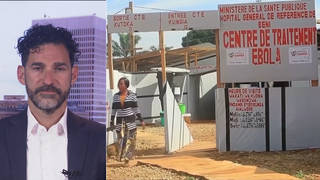
The World Health Organization declared a global health emergency on Saturday due to the rapid spread of Ebola virus in the Democratic Republic of Congo and Uganda. Ebola causes severe hemorrhagic fever and is often fatal. There’s no approved vaccine for the strain of Ebola responsible for the current outbreak, known as the Bundibugyo variant. The WHO said in a statement that the outbreak is potentially much larger “than what is currently being detected and reported.”
Public health professor and emergency room physician Dr. Craig Spencer, who is an Ebola survivor, says this Ebola outbreak could be the fourth largest in history. “This is going to be a really difficult outbreak to manage and respond to,” says Spencer. The ability of healthcare workers to address the outbreak in eastern Congo, “given the violence and conflict, is anything but ideal.”
Spencer adds that cuts to USAID and the U.S. withdrawal from the World Health Organization have increased the likelihood for viruses to spread nationally and internationally, citing outbreaks of measles in the U.S. and Ebola and hantavirus abroad. “This is not all just a coincidence,” says Spencer. “This is a consequence of us cutting back our support.”
This content originally appeared on Democracy Now! and was authored by Democracy Now!.