
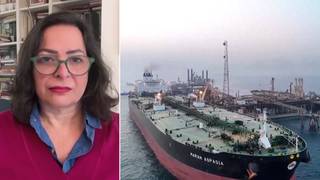
Amid the ongoing crisis in the Strait of Hormuz, we speak with Laleh Khalili, a professor of Gulf studies who researches the shipping and logistics industry and its impact on the global economy. The U.S. implemented a naval blockade on Iran earlier this week, which Khalili says could lead to its military “firing on ships that it assumes are Iranian or carrying oil from Iran or other cargo to Iran.” Iran, in response, could “interpret this as a belligerent action,” ending the fragile ceasefire agreed to by both parties. “Iran is going to defend itself against this imperial imposition, and how it’s going to do that remains to be seen.”
Meanwhile, explains Khalili, shipping disruptions in the Gulf have affected the supply chains of key resources including oil, aluminum, helium and fertilizer. “Transportation costs are going to be higher, so food prices are going to be higher; people’s MRIs are going to be scheduled out by six months … semiconductor manufacturing is going to be affected,” Khalili says. “The crisis is only going to get more horrific before it gets any better. ”
This content originally appeared on Democracy Now! and was authored by Democracy Now!.