
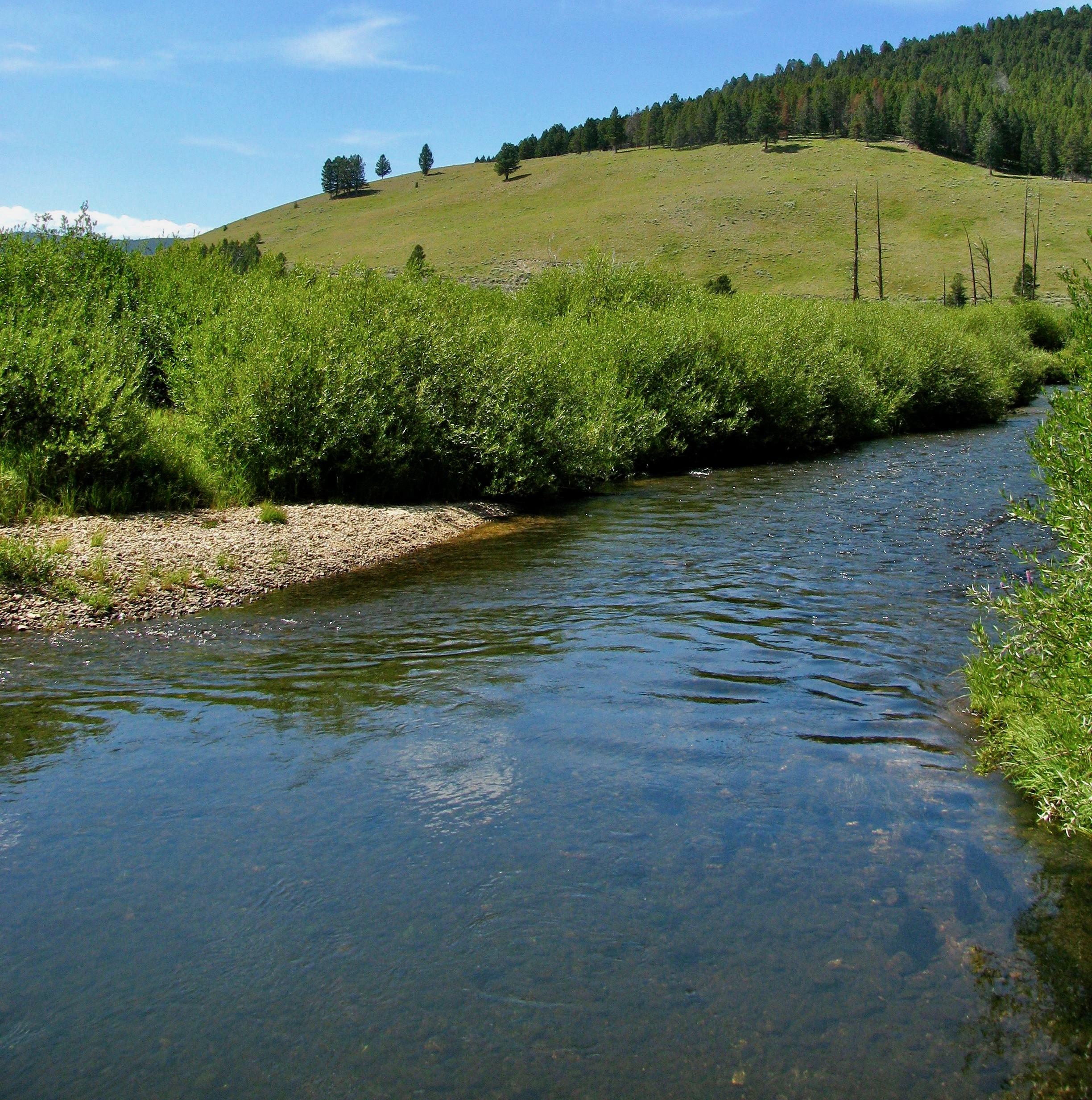
Big Hole River at Nez Perce camp, Big Hole National Battlefield. Photo: Jeffrey St. Clair.
Forty-one years ago Gov. Ted Schwinden appointed me as chairman of his newly-formed Governor’s Drought Task Force. Montana’s legendary rivers were running dry, fish were dying, and the governor was whining, “I can’t make it rain.” So he appointed a task force.
The truth is, he didn’t understand much about coldwater fisheries or that aquatic ecosystems are vibrant webs of life that rely on sufficient water to function and remain healthy. When the trout go belly up, you don’t just go to the pet store and buy some new ones … nor do you replace the desiccated insect population clinging to the dried riverbed rocks.
The drought of ’85 was wicked, and followed by the severe drought of ’88, significantly impacted our rivers, streams, the fish and their food sources that rely on cold, clean and connected water to survive … the same exact necessities they evolved with over thousands of years.
It’s safe to say that rivers and fish weren’t a concern more than one hundred years ago when the first water rights were filed, claiming as much water as they could, primarily for mining and ranching. When Montana became a state in 1889, those water rights were recognized under the Prior Appropriation Doctrine with the tenet that those who filed “first in time” were “first in right” for water use.
But the Prior Appropriation Doctrine has very serious flaws that sacrifice the Public Trust Doctrine, which requires governments to maintain and protect public resources such as rivers and fish, to the priorities of the past.
Simply put, Montana has given away more water rights and permits than there is water in our rivers and streams. That’s the baseline problem — which is now exacerbated due to increasingly low snowpacks and higher year-round temperatures. The river flows of the past, which were so generously allocated to diversionary commercial interests, no longer exist today.
Yet, just this week the Legislature’s Environmental Quality Council heard more testimony on the very serious problems facing our rivers and streams and fish. Butte’s former legislator Jim Keane put it bluntly: “We’re in trouble.”
This is nothing new; we’ve been “in trouble” for at least 40 years as ongoing droughts create ever more “low flow years.” In fact, in 1989 the legislature passed the water leasing for instream flows law that gave the state both the funds and the ability to lease water to keep our rivers and fish healthy. In ’93, that right was expanded to any willing lessee, willing lessor. In ’95, even more funds were specifically set aside to lease water for instream flows.
Yet rather than address the primary issue, which is too little water left in rivers due to over-appropriation, legislators heard about studies for diseases, algae blooms, dissolved oxygen deficiencies, nutrients, and the never-ending recreation vs commercial conflicts over river use.
Unfortunately, the state and the so-called river and fisheries “advocates” have been seriously delinquent in using the tools and funding already available to maintain instream flows to keep fish and aquatic ecosystems healthy.
Despite the ability to do so, Montana’s Department of Fish, Wildlife and Parks has never engaged in a serious, wide-spread attempt to contact water rights holders to lease water for our hundreds of chronically-dewatered rivers. Nor have the river and fisheries “advocacy” groups.
Had the state or the organizations done the work to lease sufficient water for instream flows, Montana’s rivers would not now be “in trouble.” Instead, we get more words and studies rather than providing enough water for our rivers and fish to survive — and until they do, the “trouble” is only going to get worse.
The post Montana’s Ailing Rivers Need More Water, Not Words and Endless Studies appeared first on CounterPunch.org.
This content originally appeared on CounterPunch.org and was authored by George Ochenski.