
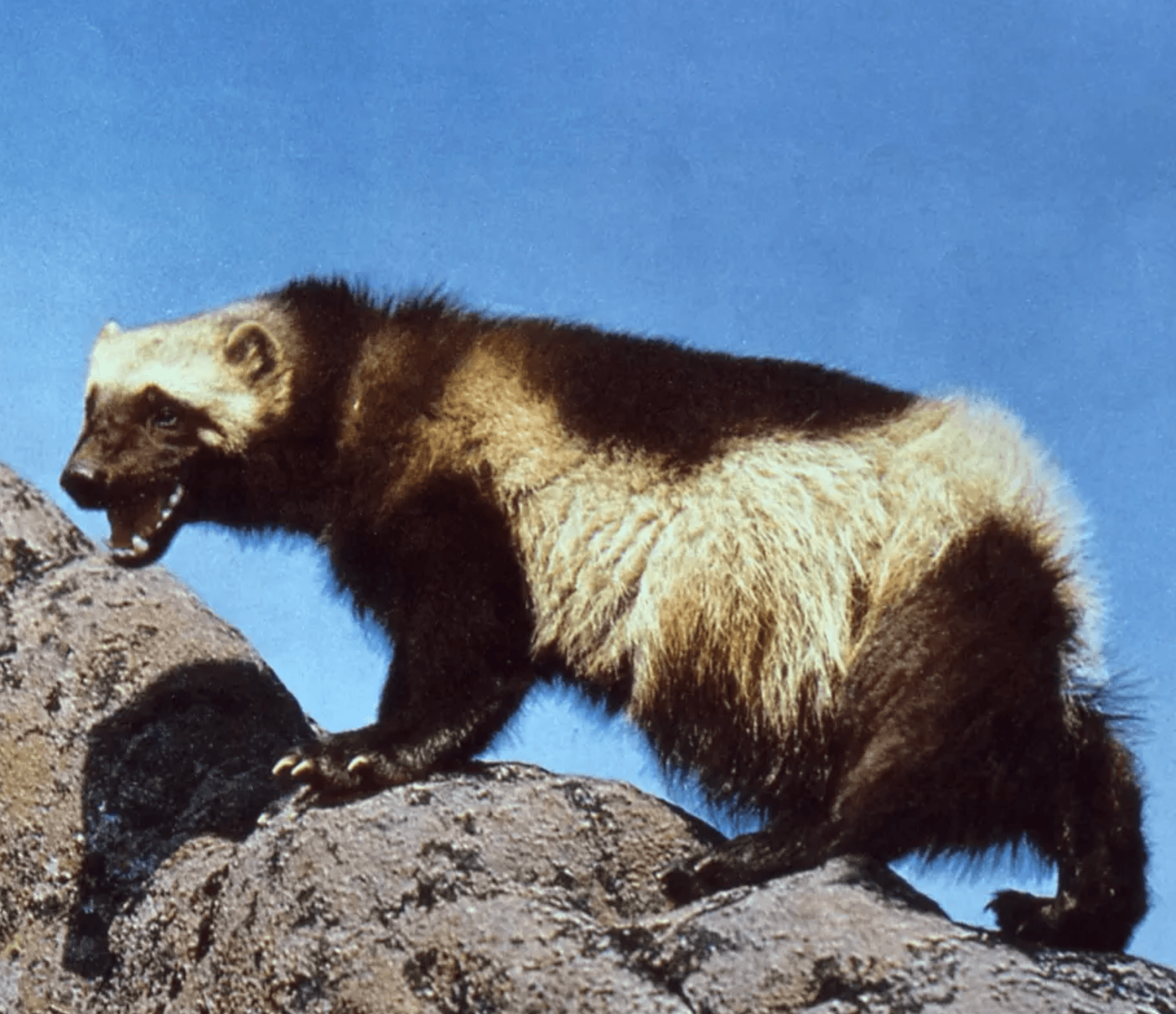

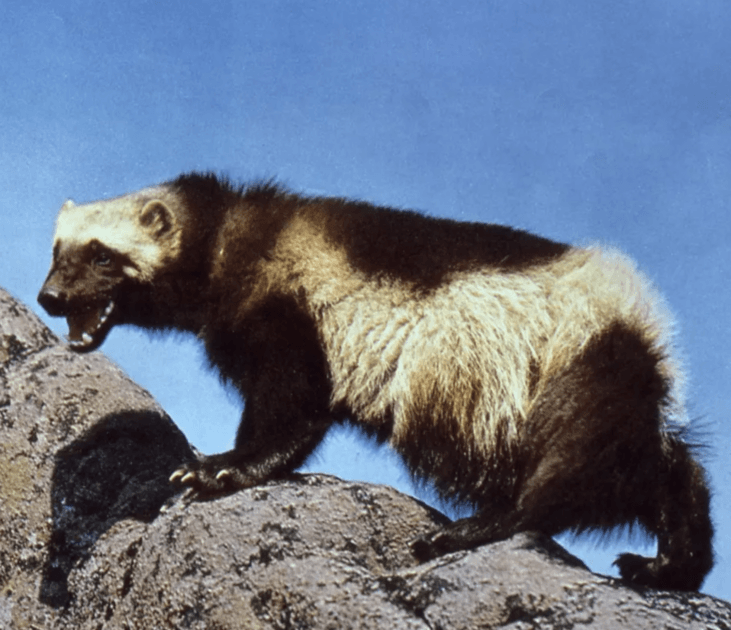
Wolverine. Photo: US Fish and Wildlife Service.
Wolverines in the lower 48 States were trapped, hunted, and poisoned to near extinction in the late 1800s and early 1900s and have not recovered, just the opposite in fact. It took court action by the Alliance and other conservation groups to finally get the dwindling population listed as “threatened” under the Endangered Species Act in 2023.
The federal government is legally required to designate “critical habitat” to protect ecosystems for the recovery of threatened and endangered species, but has failed to do so for wolverines, which are hanging on by the thinnest of threads. To stave off extinction, we need to protect the habitat in which they can survive – a challenge now further exacerbated by an increasingly hot climate diminishing the deep snows they require for denning and food storage.
It’s estimated there are only 318 wolverines remaining in the entire lower 48 States. Scientists believe the “effective population,” which is the number of individuals capable of reproducing and contributing to the next generation, is likely less than 40.
You read that right, fewer than 40 wolverines are currently capable of keeping the species from going extinct in the contiguous U.S. And what is the U.S. Fish and Wildlife Service doing to recover wolverines as required by law? Not much.
The Fish and Wildlife Service noted that wolverine populations are relatively small, fragmented, and isolated from larger populations in Canada. In Montana, the areas required for wolverines range from 193 to 588 square miles for males and 55 to 148 square miles for females.
To protect the ecosystems upon which wolverines depend, the Endangered Species Act requires the Fish and Wildlife Service to designate “critical habitat”– the areas that provide a secure habitat where they are protected from threats like incidental trapping and can successfully reproduce.
The designation of “Critical Habitat” includes those areas occupied by the species at the time of listing that possess the physical and biological features such as food, water, and shelter needed for survival and recovery. These areas may also include areas not yet occupied but needed for future population growth.
Because critical habitat designation is essential to the conservation of the species, special management consideration or protections may be required. The designation also guides federal actions to prevent destruction or modification of this habitat, thereby increasing species’ chances of recovery.
Unfortunately, the Fish and Wildlife Service has not followed the law, has not designated critical habitat, and is shirking its duty to keep wolverines from extinction, which is why the Alliance for the Wild Rockies and our fellow plaintiffs recently filed a lawsuit in federal district court in Montana.
Although the majority (95%) of wolverine habitat in the lower 48 states is federally owned and managed by the Forest Service, there are no regulatory mechanisms or standards in Forest Service Land and Resource Management Plans to protect wolverines and their habitat. Not only is nothing being done to protect and restore wolverines and the ecosystems upon which they depend, the Forest Service has also announced a massive 25% increase in national forest logging, in effect, destroying what critical habitat may be left on public lands.
The Fish and Wildlife Service has failed – and continues to fail – to comply with its mandatory, non-discretionary duty to designate critical habitat for wolverines as required by Section 4 of the Endangered Species Act. To maintain and recover the species, our choice was either take the delinquent agency to court or watch wolverines dwindle into extinction. We sided with the wolverines and are being represented by the Western Environmental Law Center.
Please consider helping the Alliance for the Wild Rockies work to recover wolverines and help Counterpunch keep readers informed about the threats threatened and endangered species face.
The post Wolverines Can’t Wait: The Feds Must Designate Critical Habitat to Stave Off Extinction appeared first on CounterPunch.org.
This content originally appeared on CounterPunch.org and was authored by Mike Garrity.